
The self-control Scripture names ninth among the fruit of the Spirit is not willpower or self-discipline in the secular sense. The Greek word is enkrateia, inner mastery over desires and impulses, and in Galatians 5 it describes what the Holy Spirit produces in a believer who belongs to Christ, not what the believer achieves alone. Self-control grows as the Spirit reorders desire from the inside, freeing the believer from being ruled by appetite and steadying them to live watchfully while they wait for Christ’s return.
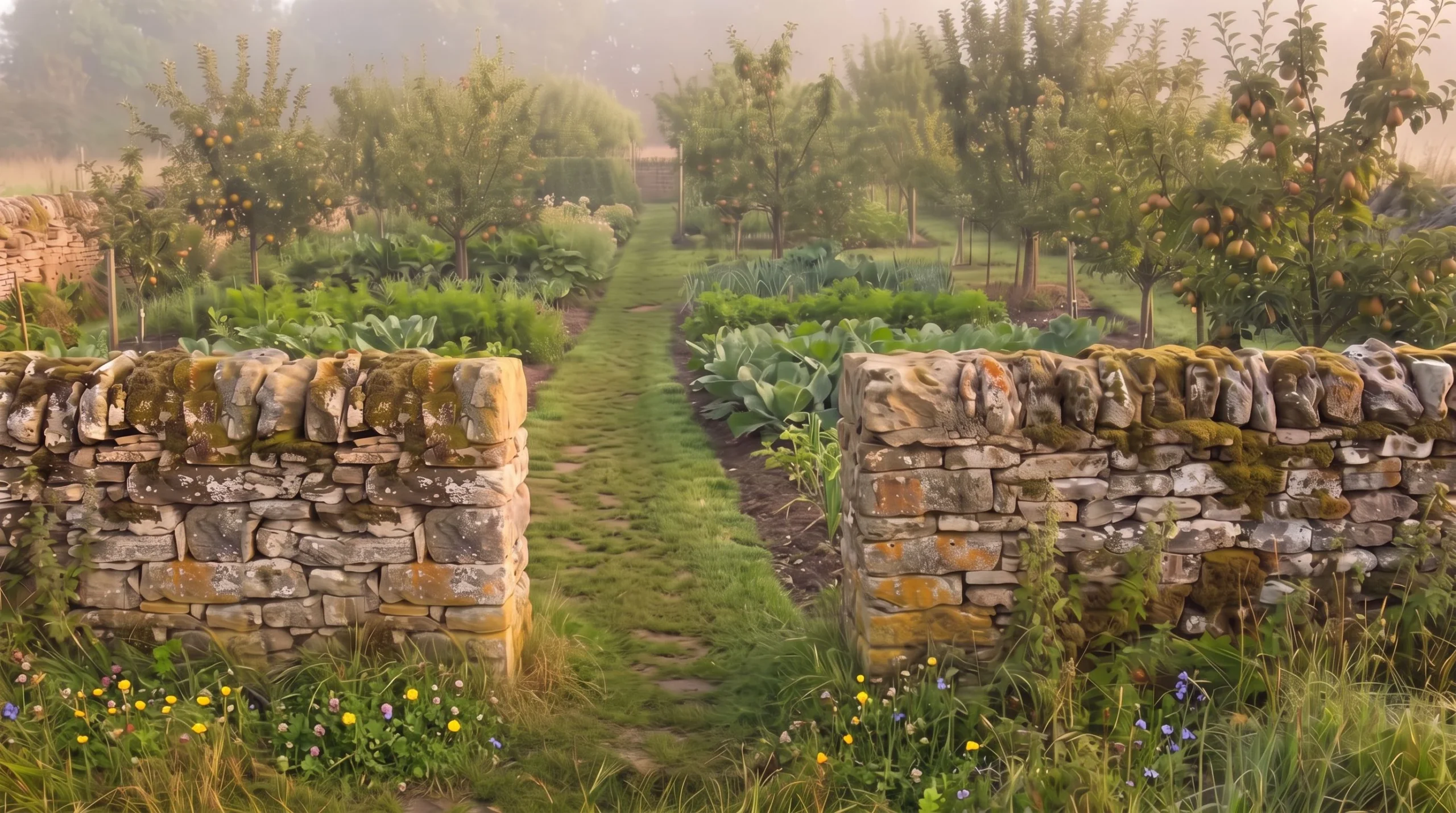
In the summer of AD 386, a thirty-one-year-old teacher of rhetoric sat in a garden in Milan and wept. He’d been fighting the same battle for years, and he’d finally come to the end of his own strength.
His name was Augustine. Most of us know him as one of the most influential teachers in the history of the church, the man whose writing shaped Christian thought for the next sixteen centuries. Fewer of us know that before any of that, he was a brilliant young man who couldn’t make himself do what he already knew was right.
He wasn’t confused about the truth. By that summer he’d been convinced in his mind that the Christian faith was true. What held him back was his appetites. His desires, sexual desire chief among them, had ruled his life since his youth, and every attempt to break their grip ended the same way. He later wrote with painful honesty about the prayer he’d been praying since he was a teenager:
“Give me chastity and continency, only not yet.” (Augustine, Confessions 8.7.17)
I don’t know a more honest prayer in all of Christian literature. He wanted to want the right thing, and he couldn’t. He described his will as divided against itself, commanding and refusing at the same time, a man fighting a war in which both armies were him.
Then, in that garden, he pictured Continence herself, the Latin word for self-control, standing before him. She was surrounded by people of every age who had found the freedom he couldn’t find, and she spoke to him:
“Why standest thou in thyself, and so standest not? cast thyself upon Him, fear not He will not withdraw Himself that thou shouldest fall; cast thyself fearlessly upon Him, He will receive, and will heal thee.” (Augustine, Confessions 8.11)
Moments later he heard a child’s voice from a nearby house repeating a simple phrase: “Take up and read.” He picked up the letters of Paul that were lying close by, opened them, and read the first words his eyes fell on:
“Let us walk properly as in the daytime, not in orgies and drunkenness, not in sexual immorality and sensuality, not in quarreling and jealousy. But put on the Lord Jesus Christ, and make no provision for the flesh, to gratify its desires.” (Romans 13:13–14)
He wrote that he needed to read no further. Something settled in him that years of effort had never been able to settle.
Look closely at what that verse didn’t say. It didn’t tell Augustine to try harder, grit his teeth, or finally get a grip on himself. It told him to put on the Lord Jesus Christ. His self-control didn’t begin when he got hold of his desires. It began when he stopped standing in himself and let Someone else hold him.
That’s enkrateia. That’s what the Spirit grows in believers who belong to Christ.
Scripture lists self-control ninth in the fruit of the Spirit, the last quality in the list. In Greek, the word is enkrateia, and it describes inner mastery: a life that isn’t ruled by its appetites, impulses, and passions. If you’ve read the eight articles before this one, you may have noticed something about this fruit that feels a little strange. Eight times now we’ve said the same thing, that the Spirit grows the fruit and you don’t manufacture it. And then the ninth fruit is literally called self-control.
So here’s the question this article sets out to answer: If self-control is the Spirit’s fruit, why does it feel like it all depends on me?
Why Self-Control Comes Ninth
The Spirit’s order in Galatians 5 is deliberate, and it’s worth noticing where the list ends. Just a few verses earlier, the Spirit, writing through Paul, describes the works of the flesh, and that list closes with “drunkenness, orgies, and things like these” (Galatians 5:21). The fruit of the Spirit closes with self-control. The Spirit’s list ends exactly where the flesh’s list ended, with the appetites that used to run the old life.
“But the fruit of the Spirit is love, joy, peace, patience, kindness, goodness, faithfulness, gentleness, self-control; against such things there is no law. And those who belong to Christ Jesus have crucified the flesh with its passions and desires.” (Galatians 5:22–24)
Notice what comes immediately after self-control. First, “against such things there is no law,” which tells you this fruit isn’t a new set of rules to keep. Then comes one of the most important identity statements in the New Testament: those who belong to Christ Jesus have crucified the flesh. That’s past tense. It’s a statement about who you already are, not a project you’re being assigned. Self-control sits right on the hinge between the fruit and that identity, and that placement tells you how to read it. You don’t practice self-control in order to belong to Christ. You belong to Christ, and the Spirit grows self-control in the life that’s already His (Galatians 5:25).
Self-control also stands last because of what it does for the other eight. When we introduced this series, we noted that self-control gives the rest of the fruit its integrity. Love without self-control can become consuming. Joy without self-control drifts into indulgence. Gentleness without self-control collapses under pressure. Self-control is the quality that keeps the whole life together, the way a wall keeps a city together. We’ll come back to that image.
The Word the Spirit Chose
Enkrateia is built on the Greek word kratos, which means strength or dominion. Put together, it describes power held within: a person who has mastery over their own desires instead of being mastered by them. Marvin Vincent, in his classic Word Studies in the New Testament, defined it as “self-control, holding in hand the passions and desires.”
That’s a vivid picture, and it raises the question this whole article turns on. Whose hand?
The word is rare in the New Testament. It shows up when Paul reasons with the Roman governor Felix “about righteousness and self-control and the coming judgment” (Acts 24:25), here in Galatians 5:23, and in Peter’s list of qualities that grow out of faith (2 Peter 1:6). The verb form appears when Paul describes the athlete who “exercises self-control in all things” (1 Corinthians 9:25).
The Greeks prized this word long before Paul used it. The philosopher Aristotle wrote about it at length, and his conclusion is surprisingly honest. In his view, the self-controlled person still has the wrong desires but wins the fight against them, and he ranked that person below the one whose desires had actually become healthy. In other words, the best the ancient world could offer was a permanent white-knuckle fight. You could win, maybe, but you’d be fighting until the day you died.
Here the distinction between trained virtue and Spirit-grown fruit, which has run through this whole series, matters more than it has for any other fruit. Trained self-control is real, and plenty of people have it. Athletes, soldiers, and disciplined professionals hold their desires in hand through sheer force of will, and we rightly admire them for it. But trained self-control has a ceiling. It can restrain a desire, but it can’t change one. The want is still there, waiting for a tired night or a weak moment.
Spirit-grown self-control does something willpower can’t do. Over time, it changes what you want. The Spirit doesn’t just hand you a stronger grip. He gives you a new Master, and then, slowly and patiently, He reorders the desires that used to do the mastering. That doesn’t mean the struggle disappears. Scripture is honest that “the desires of the flesh are against the Spirit, and the desires of the Spirit are against the flesh” (Galatians 5:17), and every believer knows that war from the inside. But it does mean the believer isn’t fighting alone, and isn’t fighting with nothing but willpower.
That’s why the Spirit places enkrateia among the fruit. It isn’t the self controlling the self. It’s a self that has come under new control.
Jesus as the Source
The self-control the Spirit grows in believers isn’t invented in them. It flows from Jesus, who lived the most perfectly self-controlled life in human history. And it’s worth noticing how He lived it.
“And Jesus, full of the Holy Spirit, returned from the Jordan and was led by the Spirit in the wilderness for forty days, being tempted by the devil. And he ate nothing during those days. And when they were ended, he was hungry.” (Luke 4:1–2)
Think about the scene. Forty days without food, and then the tempter offers the simplest thing in the world: turn this stone into bread. It wasn’t even a sinful appetite. It was hunger, the most ordinary desire a human body has. And Jesus answered with Scripture and refused to use His power to serve Himself on the enemy’s terms.
But look at the frame Luke puts around the story. Jesus went into the wilderness “full of the Holy Spirit” and “led by the Spirit,” and when it was over, He “returned in the power of the Spirit to Galilee” (Luke 4:14). The most perfect self-control the world has ever seen was Spirit-filled, not self-generated. If the Son of God Himself, in His humanity, faced temptation full of the Spirit, how much more do we need the same Spirit?
That’s also why Jesus understands your struggle and doesn’t just command you from a distance. Scripture says we have a high priest “who in every respect has been tempted as we are, yet without sin” (Hebrews 4:15). He knows the pull of hunger, exhaustion, and desire from the inside. He didn’t give in, and the same Spirit who filled Him now lives in you.
The Spirit, writing through Paul to Titus, makes the connection between grace and self-control explicit:
“For the grace of God has appeared, bringing salvation for all people, training us to renounce ungodliness and worldly passions, and to live self-controlled, upright, and godly lives in the present age, waiting for our blessed hope, the appearing of the glory of our great God and Savior Jesus Christ.” (Titus 2:11–13)
The word translated “self-controlled” there is a close cousin of enkrateia rather than the same word, but the point lands either way. Grace is the trainer. Self-control isn’t the price you pay to receive God’s grace. It’s what His grace produces in you after it arrives. And notice where that training is pointed: toward “waiting for our blessed hope.” We’ll come back to that, too, because it may be the most important thing self-control does.
The believer who loses sight of Jesus as the Source will find self-control turning into a grim, joyless discipline. The believer who keeps their eyes on Him will find it becoming something closer to freedom.
Self-Control That Guards
The book of Proverbs gives us one of the most memorable pictures of self-control in all of Scripture:
“A man without self-control is like a city broken into and left without walls.” (Proverbs 25:28)
In the ancient world, a city’s walls were its life. Walls didn’t exist to imprison the people inside. They existed to protect everything that mattered: the homes, the families, the markets, the wells. A city without walls wasn’t free. It was exposed, open to anyone who wanted to walk in and take what they wanted.
That’s what self-control is. It’s walls, not chains. The Spirit, writing through Paul, insists that “for freedom Christ has set us free” (Galatians 5:1), and then warns the Galatians not to use that freedom “as an opportunity for the flesh” (Galatians 5:13). Self-control isn’t the opposite of Christian freedom. It’s what protects it.
You can see those walls go up in ordinary places. They show up in how you eat, drink, and spend. They show up in the tongue, which James says no human being can tame on their own (James 3:2–8), and in the temper, where Proverbs says “he who rules his spirit” is better “than he who takes a city” (Proverbs 16:32). They show up in where you let your attention go at eleven o’clock at night with a phone in your hand, and in how you steward sexual desire. In every one of those places, the question isn’t whether you have desires. Everyone does. The question is what’s holding them.
Paul had seen the best the ancient world could do with self-control. In Corinth, the city that hosted the famous Isthmian Games, he wrote:
“Every athlete exercises self-control in all things. They do it to receive a perishable wreath, but we an imperishable.” (1 Corinthians 9:25)
Vincent’s notes on that verse paint the picture. An athlete preparing for the games trained for ten months under the eye of appointed judges, much of it on a strict diet. The philosopher Epictetus described the regimen: spare food, no sweets, exercise at the appointed hour “in heat and in cold.” And the prize, Vincent notes, was a crown made of pine leaves. All that discipline, the best self-control human effort could produce, for a wreath that would be brown within a week.
Paul isn’t saying the Christian earns the imperishable crown by out-disciplining the athletes. He’s saying the believer’s self-control finally has a purpose worthy of it. It serves the race. It doesn’t buy the finish line.
And here’s where self-control connects to the heart of what this site is about. Peter wrote:
“The end of all things is at hand; therefore be self-controlled and sober-minded for the sake of your prayers.” (1 Peter 4:7)
Look at what Peter does with the expectation of Christ’s return. He doesn’t use it to stir up panic, sell urgency, or send believers scanning the headlines. He tells them to be self-controlled and clear-minded so they can pray. Paul does the same thing with the Thessalonians, calling them “children of light” and “children of the day” who stay awake and sober while the world around them sleeps (1 Thessalonians 5:5–8). In Scripture, the hope of Christ’s return doesn’t produce frenzy. It produces steadiness.
Self-control, it turns out, is what waiting faithfully looks like on an ordinary Tuesday. It’s the believer who isn’t swept along by every appetite or every alarm, because they know Whom they’re waiting for. If you’ve ever wondered what biblical watchfulness without fear looks like day to day, this is it.
How Self-Control Grows in a Life
None of this is something the believer manufactures. Self-control is fruit. Like every fruit of the Spirit, it grows in its own season, in its own way, under the Spirit’s care. It grows in proximity to the Spirit, over time. There’s no shortcut and no technique that bypasses the Gardener. But Scripture does describe the kind of soil where this fruit tends to grow.
The Spirit grows self-control where the believer remembers whose they are. “You are not your own,” Paul writes, “for you were bought with a price” (1 Corinthians 6:19–20). That price was the blood of Jesus, who bore the penalty for your sin in your place so that you could belong to God completely. Self-control doesn’t start with a rule. It starts with an identity: you’ve been bought, you’ve been set free, and the One who paid for you lives in you now. This is the same order this whole series has followed, identity before responsibility, belonging before behavior.
The Spirit grows self-control where the believer walks with Him day by day. One of the most freeing verses in the New Testament is a promise before it’s a command: “Walk by the Spirit, and you will not gratify the desires of the flesh” (Galatians 5:16). Notice the order. It doesn’t say “stop gratifying the flesh and then you’ll be able to walk by the Spirit.” It says walk by the Spirit, and the flesh loses its grip along the way. Paul says the same thing to the Romans: it’s “by the Spirit” that you put to death the deeds of the body (Romans 8:13). Your part is real. You walk. But the power behind every step is His (Philippians 2:13).
The Spirit grows self-control where desire is fed on something better. You rarely starve a desire into submission. More often, the Spirit crowds it out by giving you something you want more. A heart that’s delighting in the Lord (Psalm 37:4), filling itself with what’s true and lovely (Philippians 4:8), and tasting the goodness of God in Scripture and prayer has less room for the cravings that used to fill it. This is why self-control so often grows quietly, as a side effect of nearness to Christ, rather than as the result of a direct assault on the problem.
The Spirit grows self-control where the believer builds wise walls ahead of time. Romans 13:14, the verse that changed Augustine’s life, doesn’t stop at “put on the Lord Jesus Christ.” It continues: “make no provision for the flesh.” That’s practical. It means deciding in advance not to keep the bottle in the house, not to take the phone to bed, not to walk back into the situation that always ends the same way. Building those walls isn’t legalism or self-reliance. It’s the humility of someone who knows their own weakness and has stopped pretending to be stronger than they are.
The Spirit grows self-control in honest fellowship within a local church. Nobody was designed to hold these walls alone. Scripture tells believers to “confess your sins to one another and pray for one another, that you may be healed” (James 5:16), and to “bear one another’s burdens” (Galatians 6:2). God’s design is that you grow inside a real congregation, under the care of a pastor, among people who know you well enough to notice when a wall is cracking and love you enough to help rebuild it. And as you grow, you’ll find yourself contributing too, using the gifts the Spirit has given you to help someone else hold their walls. That kind of fellowship is one of the primary ways the Spirit does this work.
All of these are soil conditions. None of them is causation. The Spirit causes the growth. The believer tends the soil, stays close to the Vine, and trusts the Gardener with the harvest.
The Spirit, writing through Paul, said it most simply in the same chapter where this fruit is named: “If we live by the Spirit, let us also keep in step with the Spirit” (Galatians 5:25).
That’s the self-control the Spirit grows.
Key Takeaways
- The self-control named ninth among the fruit of the Spirit is enkrateia, inner mastery over desires and impulses, and Scripture presents it as the Spirit’s work in a believer rather than an achievement of willpower.
- Self-control isn’t the self controlling the self. It’s a self that has come under new control. Trained self-control can restrain a desire; Spirit-grown self-control, over time, changes what you want.
- Jesus’ own self-control in the wilderness was Spirit-filled, not self-generated, and the same Spirit now lives in every believer (Luke 4:1, 14).
- Self-control works like a city’s walls, not a prisoner’s chains: it protects the freedom Christ has given rather than taking it away (Proverbs 25:28; Galatians 5:1).
- In Scripture, the hope of Christ’s return produces steadiness, not frenzy. Self-control is what waiting faithfully looks like day to day (1 Peter 4:7).
Questions To Sit With
Both, in the right order. Galatians 5:23 names self-control as fruit, something the Holy Spirit produces in a believer. At the same time, the believer is called to walk by the Spirit and keep in step with Him (Galatians 5:16, 25), which involves real choices every day. The difference is where the power comes from. You participate, but the Spirit is the One who supplies the strength and, over time, changes your desires (Philippians 2:13).
Willpower is the human ability to restrain a desire through effort. It’s real and it has value, but it has a ceiling: it can hold a desire back without ever changing it. Biblical self-control includes restraint, but it goes deeper, because the Spirit reorders what a believer wants over time. Willpower fights the same battle forever. Spirit-grown self-control slowly changes the battlefield.
Enkrateia is the Greek word translated “self-control” in Galatians 5:23. It comes from kratos, meaning strength or dominion, and describes mastery over one’s own desires and impulses. Marvin Vincent defined it as “holding in hand the passions and desires.” In the fruit of the Spirit, the emphasis is on whose hand is doing the holding: the Spirit’s work in the believer, not unaided human effort.
Self-control closes the list exactly where the works of the flesh closed theirs, with the appetites that ruled the old life (Galatians 5:21–23). It also gives the other eight their integrity. Love, joy, gentleness, and the rest can all be bent out of shape by desires that aren’t held in check. Self-control is the wall that keeps the whole life together.
Yes. Scripture says the Spirit lives in every believer (Romans 8:9), and it’s equally honest that the flesh and the Spirit are at war inside every believer (Galatians 5:17). Struggle isn’t evidence that the Spirit is absent. Often it’s evidence that He’s present and resisting what used to go unchallenged. Your assurance rests on Christ’s finished work and the Spirit’s seal (Ephesians 1:13–14), not on a perfect record.
Proverbs 25:28 says, “A man without self-control is like a city broken into and left without walls.” Without self-control, a life is exposed: anything can walk in and take what it wants. Scripture treats the lack of self-control seriously, but it never answers it with shame. It answers it with the Spirit, who grows the walls a believer can’t build alone.
Peter connects them directly: “The end of all things is at hand; therefore be self-controlled and sober-minded for the sake of your prayers” (1 Peter 4:7). In Scripture, the expectation of Christ’s return is meant to make believers steady, clear-minded, and prayerful, not anxious or frantic. Self-control is what faithful waiting looks like in daily life.
When Self-Control Feels Out of Reach
For many of us, self-control is the fruit we feel the absence of most sharply. There’s usually one area, sometimes more than one, where you’ve lost the same fight so many times you’ve stopped expecting to win. Maybe it’s the temper that flares before you can catch it, the habit you swore off last month, or the appetite you keep feeding even while you’re asking God to take it away. You’ve read articles like this one before, and you’re tired.
That’s honest. The Spirit isn’t surprised by it.
Self-control is probably the fruit most tempting to approach as a self-improvement project, which is exactly why it so often disappoints us. We try to grow it by gripping harder, and when that fails, we conclude we must not be trying hard enough. But Augustine tried for years, and his grip never held. What changed him wasn’t a better grip. It was letting go into the hands of Someone stronger.
If you’re in a season where self-control feels out of reach, the move isn’t to grit your teeth or to give up. It’s to come home. Failure doesn’t send you out of God’s family. It sends you back to the Father, the way repentance has always worked for citizens of heaven. Tell Him the truth. Tell someone in your church the truth, too, and let your pastor help you build the walls you can’t build alone. And if a struggle has become a bondage that’s damaging you or the people you love, there’s no shame in seeking trained help as well. The Spirit often does His work through the people He places around you.
The self-control will grow. It won’t grow on your timeline; it’ll grow on the Spirit’s. But it will grow, because the One who began a good work in you has promised to finish it (Philippians 1:6).
Augustine lived another forty-four years after that afternoon in the garden. He didn’t pretend afterward that temptation was gone, and later in the Confessions he wrote openly about the desires he still had to bring to God. But the man who couldn’t make himself want what was right became a man who wanted Christ more than anything else. Not because he finally tried hard enough. Because he cast himself on the One who would not let him fall.
One Fruit, One Root, One Gardener
With this article, our walk through the fruit of the Spirit comes to its end. Over nine articles we’ve looked at love, joy, peace, patience, kindness, goodness, faithfulness, gentleness, and self-control, one at a time. But if you’ve walked the whole way with us, you’ve probably noticed that we kept telling the same story. Every fruit flowed from God’s own character before it ever showed up in ours. Every one grew in the same soil of nearness to Christ, and every one came from the same Spirit, the Gardener who lives in every believer and is patiently making them like Jesus.
That’s why Scripture calls it fruit and not fruits. Nine qualities, one life. One root, one Gardener. If you’d like to see the whole picture again, the series overview on the fruit of the Spirit is a good place to step back and take it in.
The harvest isn’t your project. The Spirit is the Gardener. So don’t stand in yourself, where there’s no footing. Put on the Lord Jesus Christ, keep in step with His Spirit, and wait for His appearing with a steady heart and walls that hold.
Christ reigns. Christ restores. Christ will return.
Longing for Christ, learning to wait faithfully.
Your brother in Christ,
Duane