
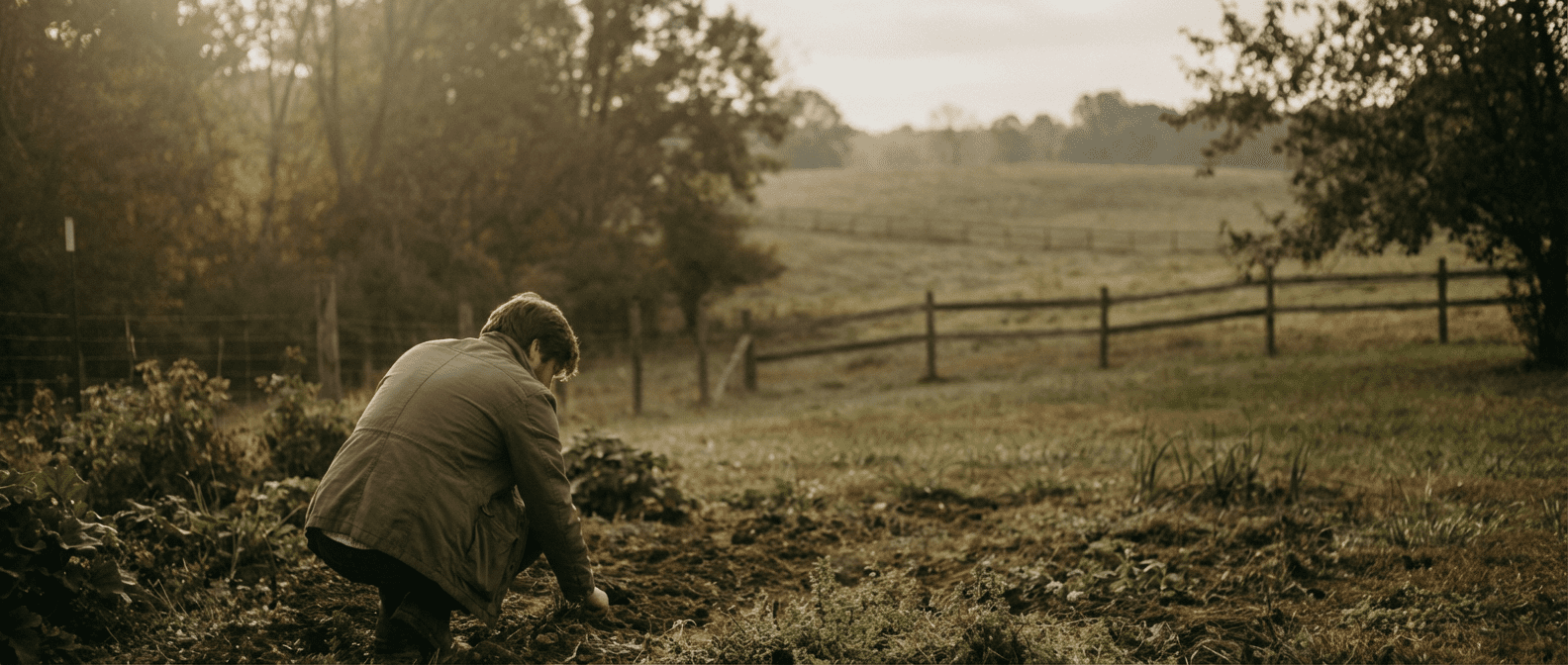
Watchfulness, as Jesus describes it, is not a posture of nervous alertness. It is faithful obedience to a present King: the steady practice of doing what has been entrusted, loving those nearby, and remaining aligned with Christ’s will in the ordinary moments of each day. When readiness is understood this way, it stops being exhausting and starts being formative.
Not long ago, someone told me, “I just want to make sure I’m ready.”
They weren’t talking about packing a bag or making plans. They meant spiritually ready. Ready for Christ’s return. Ready for whatever God might do next. And beneath their words, I could hear something I’ve heard many times before: a quiet uncertainty about what readiness actually looks like.
For years, I assumed readiness meant heightened awareness. I thought it required a kind of constant alertness, as if faithful Christians should always feel slightly on edge. But over time, Scripture began reshaping that assumption. Jesus speaks often about watchfulness, yet when He describes it, He consistently connects it to something surprisingly ordinary.
He connects it to obedience.
The Servant Who Is Found Faithful
When Jesus teaches about readiness in Matthew 24, after telling His disciples to stay awake, He immediately asks:
“Who then is the faithful and wise servant, whom his master has set over his household, to give them their food at the proper time? Blessed is that servant whom his master will find so doing when he comes.” (Matthew 24:45–46)
The servant is not waiting passively. He is not frozen in anticipation. He is carrying out the responsibilities entrusted to him. Readiness, in Jesus’ own words, looks like faithfulness in assigned work.
That changes how we think about watchfulness. It means readiness is not measured by intensity but by obedience. It is not a posture of nervous expectation. It is a life aligned with the will of a reigning Master. And it’s not a life you sustain alone. The Holy Spirit lives in every believer and produces that steady faithfulness from within (Galatians 5:22–23). The question Jesus is forming in His disciples is not “How much urgency do you feel?” but “Are you doing what was given to you?”
Are we in the last days? is a fair question, and Scripture has a calm, grounded answer. But once the era is understood, the practical formation follows: stay awake in the way that actually matters: faithful, present, and engaged with what is right in front of you.
Obedience Flows From Identity
One reason watchfulness becomes distorted is that obedience itself is often misunderstood. Many people hear obedience and think pressure, performance, or fear of failure. But Scripture consistently frames obedience differently.
In the larger story of God’s relationship with His people, obedience always follows rescue. God delivered Israel from Egypt and then gave the law. He established who they were before He called them to how they should live. Identity precedes responsibility, and the same pattern holds for Kingdom citizens today. You are not obeying to earn belonging. You are obeying because you already belong, and the King calls His citizens to live as who they are.
When obedience flows from restored relationship, it becomes participation rather than pressure. This is why readiness is not about proving devotion. It is about living faithfully within a restored fellowship under Christ’s present reign.
Lamps Burning, Lives Aligned
Jesus uses another image in Luke 12:
“Stay dressed for action and keep your lamps burning.” (Luke 12:35)
“You also must be ready, for the Son of Man is coming at an hour you do not expect.” (Luke 12:40)
These images are practical, not dramatic. The servants are clothed for work. The lamps are maintained. The household is functioning. Nothing about this suggests frantic activity. It suggests preparedness expressed through daily responsibility.
A lamp does not burn because someone stares at it. It burns because someone tends it. In the same way, spiritual readiness is sustained not by speculation but by steady obedience. Prayer tended consistently. Scripture received regularly. Community maintained honestly. Work done with integrity. These are the practices that keep the lamp burning, not the intensity of anxious self-examination.
Faithfulness in the Ordinary
It is easy to imagine that readiness requires some special elevated state. But Jesus describes something more accessible and more demanding at the same time: consistency in the ordinary. The servant in Matthew 24 is doing the same thing he was doing yesterday (The full discourse ends on him for a reason.) and the day before. He is not preparing a dramatic last-moment devotion. He is simply still there, still doing what he was given to do.
Living under Christ’s authority now is what this looks like in daily practice. You rise in the morning and bring what the day holds to the One who holds the day. You face the difficult conversation, the tedious responsibility, the person who is hard to love, and you do the next faithful thing. Not because you have tried to calculate when Jesus will return, a day the Father alone knows, but because you belong to a King and this is what belonging looks like.
Faithfulness in the ordinary is not glamorous. It is, however, exactly what Jesus says He is looking for.
Obedience Under a Reigning King
This kind of watchfulness is stabilized by the reality that Christ reigns now. His authority is not provisional or partial. His return does not represent Him coming to finally take control of something He has not yet managed. He is already King. His people live today as citizens of a Kingdom already established.
This keeps watchfulness from drifting into anxiety. We are not trying to secure an uncertain outcome. The future is secure in Christ. His return completes what He has already begun. Obedience is not urgency. It is loyalty.
And loyalty does not strain. It does not have to prove itself daily against some invisible standard of sufficient intensity. It simply remains. It shows up. It tends the lamp.
The Patience of Hope
Scripture calls the return of Christ our Blessed Hope, and hope in the Bible is not restless energy but settled confidence in God’s promise. It allows patience under delay and steadiness amid hardship. When hope is secure, obedience becomes sustainable; we do not rush to prove ourselves, we do not strive to secure what has already been promised, we remain faithful because we trust the character of the King.
This connects watchfulness naturally to endurance. Hope rooted in Christ holds even through the seasons when obedience feels costly, when faithfulness goes unnoticed, when the return seems distant. Suffering in a fractured world is not evidence that the King has abandoned His people; it is the terrain of faithful living between the first coming and the completion. Endurance forms faithfulness just as steadily as dramatic moments do, and perhaps more permanently.
Watchfulness That Grows Quietly
When someone asks “How do I make sure I’m ready?” the answer is simpler than we often expect.
Walk with your King.
Confess sin when the Spirit convicts you. Forgive when you have been wronged. Speak truth with gentleness. Practice gratitude. Remain faithful in what has been entrusted to you.
This is readiness.
Not calculation. Not tension. Not fear.
Obedient living under Christ’s present reign. And that kind of watchfulness does not exhaust you. It forms you.
Key Takeaways
- Matthew 24:45–46 defines readiness as faithfulness in assigned work, not intensity of alertness; the question is not “How much urgency do you feel?” but “Are you doing what was given to you?”
- Obedience follows identity: God established who His people were before calling them to how they should live, and Kingdom obedience flows from belonging rather than striving to earn it.
- The lamp burns because someone tends it, not because someone stares at it: readiness is sustained through steady practice: prayer, Scripture, community, honest work, not through anxious self-examination.
- Watchfulness is stabilized by Christ’s present reign; the future is already secure, which means obedience is loyalty rather than urgency, and loyalty does not strain.
- The patience that makes obedience sustainable comes from hope rooted in Christ’s character rather than hope measured by visible circumstances.
Questions Worth Sitting With
It means to remain spiritually attentive and living in conscious faithfulness to your Lord, not to monitor current events for prophetic signals. The servants Jesus commends in Matthew 24 are looking for their master’s return by doing their assigned work, not by studying the road for clues about when he’ll arrive. Their watchfulness is expressed through ongoing faithfulness, not through heightened alertness about timing.
Because readiness is expressed through how you live rather than through how intensely you feel. A life of prayer, honest work, honest repentance, patient love, and steady faithfulness is a life prepared for the King’s return in the deepest sense. These practices orient you toward Christ consistently, which is exactly what watching over a long period of time actually looks like.
That is likely a sign that formation is happening rather than a sign that something is wrong. Jesus consistently describes readiness in ordinary images: a servant doing his work, lamps kept burning, a household functioning. Spiritual maturity tends to become quieter rather than louder over time: less dramatic, more consistent. That consistency is what faithfulness actually looks like across a lifetime.
Scripture never speaks of His coming as far off; the apostles said “the Lord is at hand” (Philippians 4:5), and the day itself rests in the Father’s hands. Motivation for obedience that depends on urgency about timing is fragile; it fluctuates with the news cycle. Motivation that flows from love for the King, gratitude for what He has secured, and trust in His character is far more stable. The servants in Luke 12 are not motivated by anxiety about when the master arrives. They are serving because that is who they are and what they were given to do.
Suffering in a fractured world is part of the terrain, not evidence of failure. Endurance through difficulty is itself a form of watchfulness: it is the refusal to conclude that God has abandoned His purposes because the present season is hard. The believer who keeps doing the next faithful thing while carrying genuine weight is practicing exactly the kind of watchfulness Jesus describes: steady loyalty to a King whose return is certain.
Readiness does not require a new intensity. It requires a renewed faithfulness to what was already given. The lamp is already lit. Tend it.
Christ reigns. Christ restores. Christ will return.
Longing for Christ, learning to wait faithfully.
Your brother in Christ,
Duane