
Suffering is not a sign that God has stepped away or that something has gone wrong with your faith. It is the normal experience of living in a world still awaiting its full restoration. Since the Fall fractured humanity’s fellowship with God, creation has carried a weight it was never designed to hold, and believers live in that weight alongside everyone else, sustained by a reigning King whose purposes are neither delayed nor threatened by what they endure.
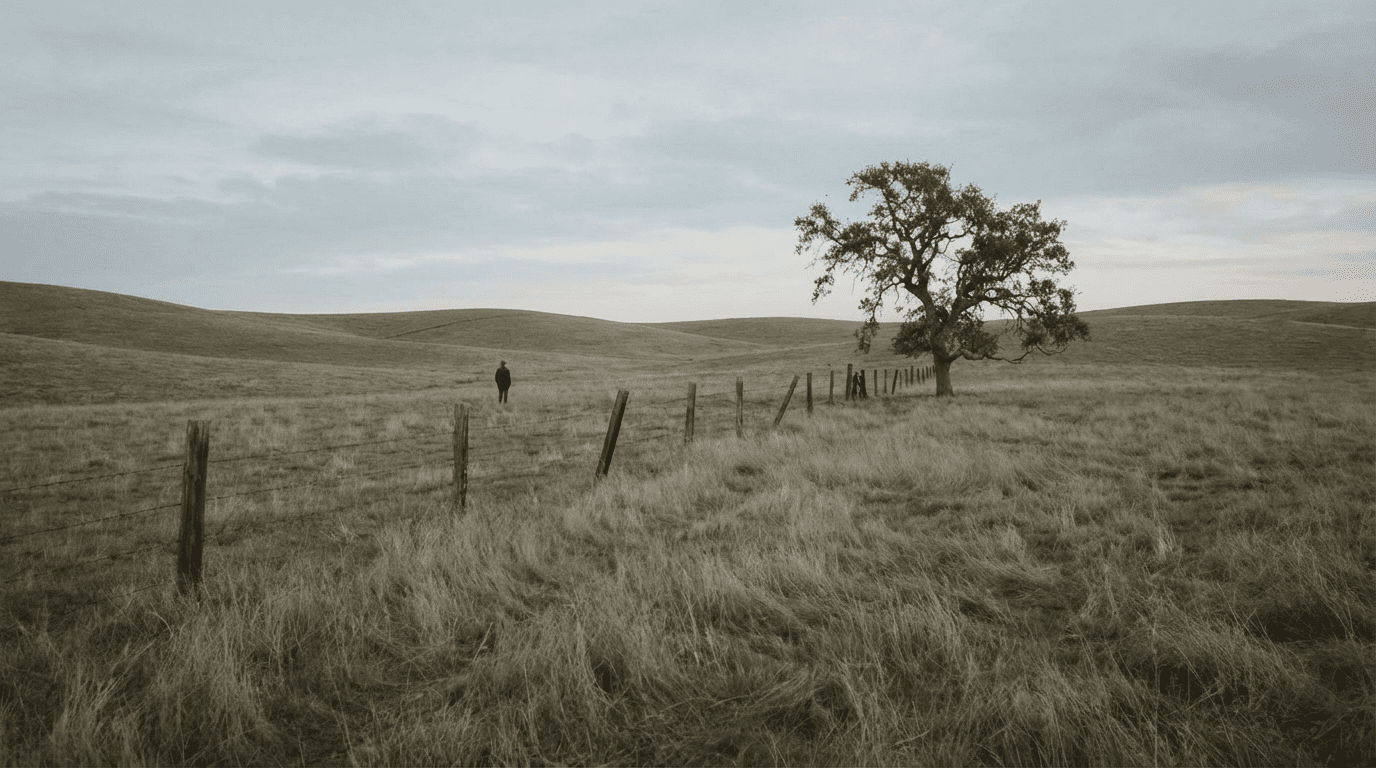
Last week I was walking through a stretch of land that used to be part of an old family farm. The fence lines were still there, but sagging. The barn leaned slightly to one side, as if it had grown tired of holding itself up. Grass had pushed through gravel, and the wind moved through the open field with a quiet, steady sound that felt older than the structures standing in it.
Nothing was dramatic. Nothing was collapsing in front of me. But everything carried the quiet evidence of wear.
As I stood there, I thought about how much of life feels the same way. Not always explosive, not always catastrophic, just worn. Strained. Bent in places it was never meant to bend.
That’s what it means to live in a fractured world.
Where the Fracture Began
The story of suffering does not begin with personal failure, bad luck, or random cruelty. It begins in the Garden, when fellowship with God was fractured and the world shifted under humanity’s feet. What had been whole became strained, and what had been ordered became marked by decay and death, not as arbitrary punishments but as the consequences of broken communion with God (Genesis 3:16-19). The ground itself was affected. Work became heavy. Relationships became tense. Creation no longer operated in seamless harmony.
That fracture did not disappear with time. It echoes through every generation.
We feel it in bodies that grow tired and fail. We see it in relationships that strain under misunderstanding. We experience it in grief that settles in slowly and does not leave quickly. Suffering is not proof that God has stepped away. It is evidence that we are living east of Eden, in a creation that awaits restoration.
And yet even in Genesis 3, God does not abandon His people. He seeks them. He speaks to them. He clothes them. The fracture introduces hardship, but it does not cancel His pursuit. That response in Eden is the pattern that holds across all of Scripture: the world is broken and God is redeeming it, and He has never once abandoned a purpose He began.
Suffering Is Not Rejection
One of the quiet fears believers carry is the suspicion that suffering signals distance from God, that if He were truly present and good, things would be resolving by now. When hardship lingers, it is easy to read delay as abandonment.
Scripture consistently resists that interpretation. Paul describes creation itself as “groaning together in the pains of childbirth” (Romans 8:22), and that image matters. Groaning is not abandonment. It is strain within a process that is moving somewhere. Creation aches because it is not yet fully healed, not because it has been discarded. The groaning is the sound of a world in labor, not a world in ruin.
Suffering, then, is not a verdict on your worth. It is part of living in a world not yet fully restored. God’s reign has not been threatened by your hardship. Christ remains King even when circumstances feel unstable. Identity before responsibility means your standing before God is not determined by the difficulty of your present season. The suffering you carry does not mean you are less loved, less seen, or less held than you were before it arrived.
God reigns even amid suffering, and endurance is part of Kingdom life.
The Slow Work of Endurance
If relief were the primary promise of Scripture, many passages would read very differently. Instead we find a repeated call to endure, to remain, to hold fast when resolution is not immediate. James writes:
“Count it all joy, my brothers, when you meet trials of various kinds, for you know that the testing of your faith produces steadfastness.” (James 1:2-3)
That steadfastness is not the absence of difficulty. It is faithfulness shaped by difficulty over time. The testing produces something, and what it produces is a durable, tested trust rather than the fragile variety that only holds when circumstances cooperate.
Endurance without despair is possible precisely because it has a ground: Christ’s present reign, active purposes, and the certainty of restoration. You endure not by generating sufficient emotional strength but by returning repeatedly to what remains true. The One who promised is faithful. The work is not finished, but it is continuing.
Christ’s Reign in a Worn World
Hardship can quietly create the impression that the world is unraveling without supervision. The fractured farm, the strained relationship, the body that won’t cooperate, the season that won’t resolve: these can feel like evidence of a universe running without a caretaker. But the biblical frame is precisely the opposite.
Paul writes in Romans 8:28 that God works all things together for good for those who love Him. That sentence is not naive optimism or a guarantee that every circumstance will resolve the way you hope. It is a claim about sovereignty: the same God who holds all authority in heaven and on earth (Matthew 28:18) is present and purposeful even in what is broken. The worn structures, the sagging fences, the slow grief, none of it falls outside His awareness or His purposes.
Waiting without urgency in that season is not passive resignation. It is active trust in a King who is working even when you cannot trace the work.
Hope That Does Not Rush
Christian hope in the middle of suffering is not a demand that things improve quickly. It is confidence that the trajectory of the story is good, even when the current chapter is painful.
Revelation does not end with escape from the world but with renewal of it:
“Behold, I am making all things new.” (Revelation 21:5)
The promise is not that you will avoid every hardship now. The promise is that hardship will not have the final word. Hope rooted in Christ allows you to carry sorrow without surrendering to despair, to lament honestly while still trusting that God is present, and to resist the pressure to manufacture quick spiritual victories just to feel stable.
In a fractured world, hope is not denial. It is perspective.
Walking Faithfully in the Middle
Most of life is lived in the middle, not at the beginning of the fracture and not yet at the final restoration. We wake up each day in ordinary routines, carrying both gratitude and grief, strength and weakness. Faithfulness in this middle space is rarely dramatic. It looks like continuing to love when withdrawal would be easier. It looks like praying again when yesterday’s prayer did not change the situation. It looks like remaining steady in ordinary work when the larger circumstances feel unstable.
The quiet anxiety about what the suffering means, whether it signals rejection, whether it will resolve, whether God is still present, is one of the natural pressures of living in a fractured world. Christian anxiety in hard seasons is not a failure of faith; it is part of being human in a world not yet fully healed. What steadies it is not the resolution of circumstances but the return to the ground: God is here, His purposes are active, and the hardship you carry is not the end of the story.
The old farm I walked through still belongs to its rightful Owner. The sagging fences and leaning barn are not the final statement on what that land is. He is not finished with it.
You may be carrying something heavy right now. You may feel the strain of living in a world that does not function as it should. Do not interpret that strain as rejection. Interpret it as evidence that you are waiting, along with all creation, for a restoration that is certain in Christ.
Remain steady. Remain trusting. Remain anchored in the One who reigns.
Key Takeaways
- Suffering is not evidence of God’s absence or rejection; it is the normal experience of living in a world fractured by the Fall and awaiting full restoration.
- Even in Genesis 3, God’s immediate response to the fracture is pursuit rather than abandonment: He seeks, speaks, and clothes, establishing the pattern that holds throughout all of Scripture.
- Creation’s groaning in Romans 8:22 is not the sound of abandonment; it is strain within a process moving toward its completion, the labor of a world heading toward new birth.
- Christ reigns even amid suffering; your standing before God is not determined by the difficulty of your present season, and the hardship you carry does not diminish how loved or held you are.
- Hope in a fractured world is not denial or forced optimism; it is the perspective of someone who knows the trajectory of the story is good, even when the current chapter is painful.
Questions Worth Sitting With
Because suffering is the condition of a world still awaiting its restoration, not evidence of God’s absence or disapproval. The Fall introduced disorder, decay, and death into creation, and those consequences don’t vanish at conversion. Believers live in the same fractured world as everyone else. What changes is not the presence of hardship but the ground on which it is endured: a reigning King whose purposes are active even in the pain, and a promised restoration that makes the current suffering neither meaningless nor final.
Not necessarily, and for believers in Christ the punishment for sin has already been fully absorbed at the cross. Romans 8:1 declares no condemnation for those in Christ Jesus. The Bible does describe God disciplining His people, but discipline is formative rather than punitive, the work of a Father shaping a child rather than a judge exacting payment. Most suffering in a believer’s life is simply the experience of living east of Eden, in a creation that is worn and strained.
By returning repeatedly to what remains true rather than measuring faith by how you feel. The fatigue of extended hardship is real, and there is no formula that makes it easy. What endurance looks like is the consistent return: to Scripture that names what God has done, to prayer that brings the honest weight to the One who holds it, to community that bears the burden alongside you. Endurance is not a heroic emotional state; it is the quiet faithfulness of showing up again, trusting that what is happening behind the closed door of this season is not nothing.
Because the joy is not in the trial itself but in what the trial produces. James names it specifically: the testing of faith produces steadfastness, and steadfastness is what makes a faith that holds across the full arc of a life. The joy is the forward-looking confidence that the formation is happening, that the difficulty is not wasted, and that what emerges from it will be more durable than what went in. It is not forced cheerfulness. It is the settled trust of someone who knows what endurance is building.
It means no circumstance falls outside God’s purposeful awareness and activity, not that every circumstance will resolve the way you hoped. The promise is not painlessness but sovereignty: the same God who holds all authority is present and at work even in what is broken and unresolved. “Good” in this passage is anchored in His purposes and in conformity to the image of His Son (Romans 8:29), not in the believer’s immediate comfort. It is a claim about direction rather than the removal of difficulty.
The land still belongs to its rightful Owner. The sagging fence lines and the worn structures are not His final word on what the land will become. He is restoring what was fractured, one season at a time, in ways that often remain unseen until much later.
The same is true of what you are carrying right now.
Christ reigns. Christ restores. Christ will return.
Longing for Christ, learning to wait faithfully.
Your brother in Christ,
Duane