
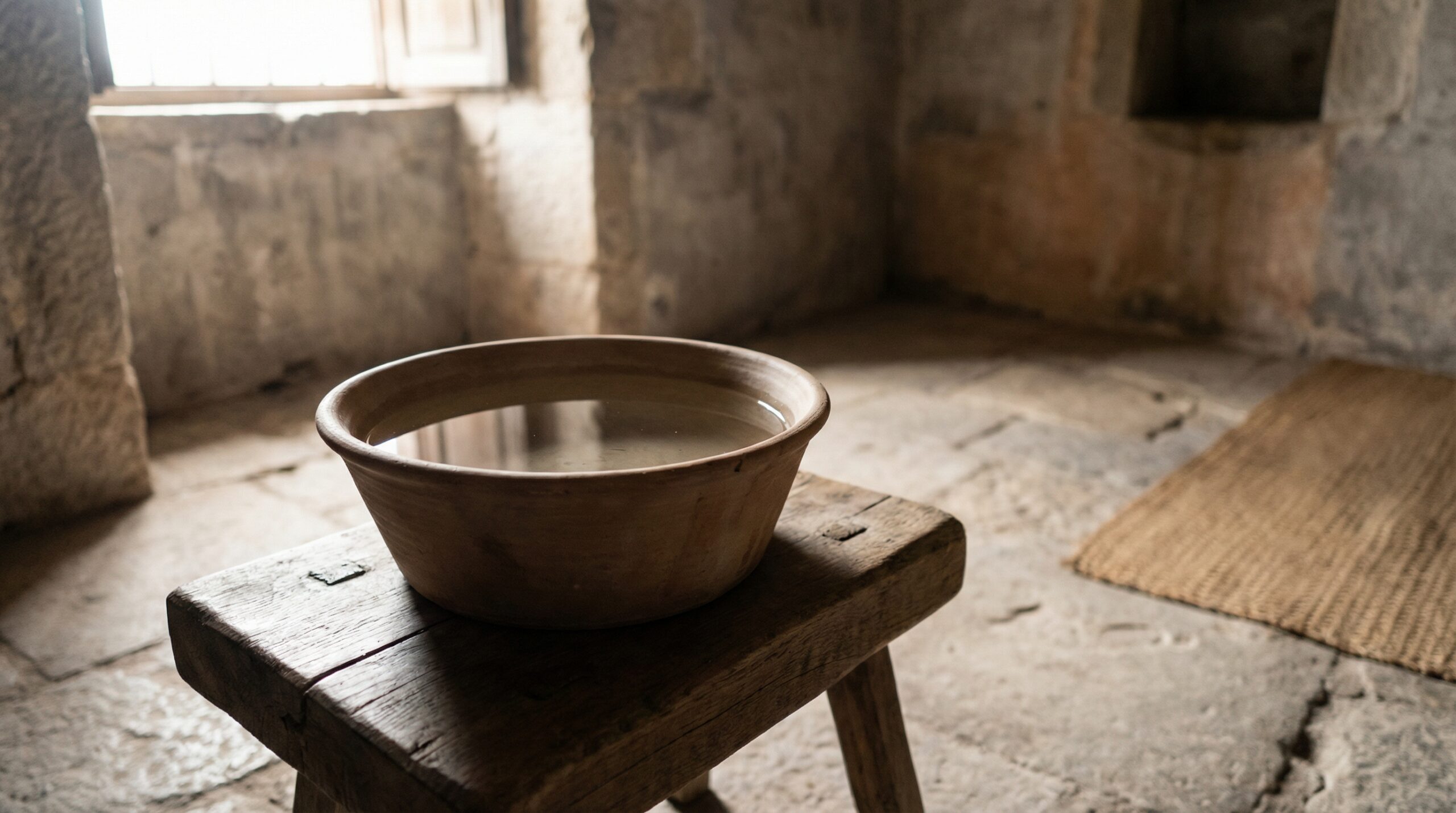
The foot-washing scene in John 13 is famous for the image it gives us of Jesus on His knees before His disciples. We tend to read it as a model of servant leadership — and it is that. But the most theologically loaded moment in the passage isn’t Jesus picking up the basin. It’s Jesus stopping in front of Peter, and Peter refusing to let Him.
I’ve known people who are genuinely gifted at serving others. They show up, they give, they volunteer for the hard and unglamorous work without needing to be asked. If you’ve spent time in a church, you know the type — and you’re grateful for them. But I’ve also watched some of those same people quietly exhaust themselves, growing resentful in small ways they’d never quite name, because somewhere underneath the serving there was a deficit they were trying to fill rather than an abundance they were drawing from.
The Peter exchange in John 13 has a great deal to say about that dynamic. And I don’t think it’s accidental that Jesus addresses it before He gives the instruction to wash one another’s feet.
The Setting Jesus Chose
John tells us something important at the opening of chapter 13. Jesus knew that His hour had come. He knew that Judas had already been moved toward betrayal. He knew that He was about to leave. And knowing all of that, knowing the full weight of what lay ahead — He got up from supper, tied a towel around His waist, and began to wash His disciples’ feet.
This detail matters because it establishes what motivated the act. Jesus wasn’t performing humility for an audience or modeling servant leadership as a teaching exercise. He was expressing, in the most concrete and unglamorous way possible, what had characterized His entire life among them. John says He loved them “to the end” — fully, completely, to the uttermost. The basin and towel were an expression of that love, not a lesson about it.
“Jesus, knowing that the Father had given all things into his hands, and that he had come from God and was going to God, rose from supper. He laid aside his outer garments, and taking a towel, tied it around his waist. Then he poured water into a basin and began to wash the disciples’ feet.” (John 13:3–5, ESV)
Notice what John includes in verse 3 before describing the act: Jesus knew that the Father had given all things into His hands, and that He had come from God and was going to God. The security came first. The serving flowed from it. This is the same sequence Paul describes in Philippians 2 — Jesus could empty Himself precisely because His identity was not located in the status He set aside. You serve freely when you’re not serving to establish something about yourself.
Peter’s Refusal
When Jesus reaches Peter, Peter objects.
“Lord, do you wash my feet?” (John 13:6, ESV)
It sounds like humility. It presents itself as humility. But Jesus responds in a way that reframes the whole thing.
“What I am doing you do not understand now, but afterward you will understand.” (John 13:7, ESV)
Peter presses harder: “You shall never wash my feet.” And Jesus replies with something that stops everything:
“If I do not wash you, you have no share with me.” (John 13:8, ESV)
That sentence is one of the most quietly radical things Jesus says in the gospel of John. Peter’s refusal wasn’t humility. It was pride dressed in the language of unworthiness — the kind of resistance that says I can manage this myself, I don’t need to be served, I am not the kind of person who lets others lower themselves for me. Peter wanted to be the one who gave, not the one who received. And Jesus tells him plainly: if you will not receive from me, you have no share with me.
Receiving is not optional. It is the condition for everything else.
What the Cleansing Actually Means
Peter, typically, overcorrects: “Lord, not my feet only but also my hands and my head!” (v. 9). Jesus gently reorients him — the one who has bathed doesn’t need to be washed again, only the feet. The picture shifts. This isn’t first about physical cleanliness, and it isn’t only about one dramatic act of self-humiliation. It’s about the ongoing, daily reality of a person who belongs to Jesus and who needs to keep returning to Him — feet that gather dust on the road, a life that accumulates the grime of ordinary failure and need.
The pattern Jesus establishes here is not strive to be clean enough to serve. It’s come back to Me, receive what I give, and then go and do likewise.
This is why the order of the passage matters so much. Jesus washes the disciples’ feet first. He receives their resistance and completes the act anyway. He explains it afterward. And only then does He give the instruction:
“If I then, your Lord and Teacher, have washed your feet, you also ought to wash one another’s feet. For I have given you an example, that you also should do just as I have done to you.” (John 13:14–15, ESV)
The example follows the act. The command follows the cleansing. You cannot faithfully do what Jesus does in John 13 by skipping what He does to you in John 13.
The Service That Flows from Fullness
This reframes everything about what it means to live like Christ. The goal isn’t to become someone who manages to serve others despite how demanding and exhausting it is. The goal is to become someone who serves from a place of having been served — who gives generously because they have genuinely received, who stoops willingly because they’re not protecting anything that needs protecting, whose hands are free to hold the basin because they’re not clenching at something else.
That kind of service doesn’t deplete the way performance depletes. It doesn’t quietly accumulate resentment the way obligation accumulates resentment. It doesn’t require constant willpower to sustain, because it isn’t running on willpower. It’s running on something that gets replenished at the source — on the ongoing grace of someone who knows they need to be washed and who keeps coming back to the One who does that washing.
The disciples at that table had been with Jesus for three years. They had seen the miracles, heard the teaching, watched the healings. And still, on the night before the cross, Jesus knelt before them with a basin and a towel. Not because they had earned it. Not because they deserved it. But because that is who He is — and that is what He keeps doing.
You don’t live like Christ by generating enough willpower to act the way He acted. You live like Christ by staying connected to Him closely enough that His character begins, over time, to be the natural expression of who you are becoming — a person who has been washed, who keeps returning to be washed, and who therefore has something real to give.
Key Takeaways
- The foot-washing scene has two movements, not one. Jesus washing the disciples’ feet is the visible act — but the exchange with Peter is the theological hinge. Receiving from Jesus is the condition for following His example.
- Peter’s refusal looked like humility but was pride. The insistence on not being served, on managing one’s own need, on not lowering oneself to receive — Jesus names this as the thing that would cut Peter off from sharing with Him.
- Jesus served from security, not from deficit. John 13:3 establishes the ground before describing the act: Jesus knew where He had come from and where He was going. His serving flowed from that settled identity, not from a need to establish anything.
- The sequence matters: cleansing before commission. Jesus washes before He instructs. The command to wash one another’s feet follows the act, not precedes it. You cannot faithfully do what Jesus does by skipping what He does to you.
- Service from fullness is different from service from obligation. The person who has genuinely received from Christ serves without depletion, gives without resentment, and stoops without protecting a status that no longer needs protecting.
Questions Worth Sitting With
Jesus isn’t threatening Peter with exclusion. He’s describing a structural reality about the relationship He’s offering. What He’s about to do — go to the cross — is something the disciples can’t do for themselves and can’t opt out of receiving. Peter’s refusal to let Jesus wash his feet was a small enactment of a larger posture: the resistance to needing anything from Jesus, the insistence on managing his own standing. Jesus is naming that posture as incompatible with genuine relationship. Communion requires receiving, not just giving.
Both, but in order. The passage doesn’t exclude literal, practical service — washing feet was a real task that real people did. But Jesus clearly intends more than a lesson in hospitality etiquette. The exchange with Peter, the language of cleansing and sharing, the placement of this scene just before the Last Supper and the farewell discourse — all of it points to something about the shape of life in relationship with Jesus, not just a model for how to be helpful. The literal act is the vehicle for the deeper point: that living like Christ begins with receiving from Christ.
Very directly. The command to love one another as Jesus has loved them comes a few verses after the foot-washing and is rooted in it. Jesus has just demonstrated the quality of love He’s describing — not sentiment, not warm feeling, but the kind of love that kneels and serves and gives even when it’s costly. And He’s established the ground for that love: it flows from belonging to Him and from receiving what He gives. “By this all people will know that you are my disciples” — not by your convictions or your theology or your visibility, but by the quality of love that is only possible in people who have been loved that way first.
It looks like the ordinary means of grace: prayer that is honest about need rather than performing sufficiency, Scripture that is allowed to search rather than just confirm, confession that names specifically rather than gestures generally, community that holds you accountable and restores you when you drift. None of those are dramatic. All of them are ways of continuing to hold out your feet — of staying in the posture of someone who knows they need what only Jesus can give, and who keeps returning to receive it.
What Jesus did in that upper room He is still doing. The basin and towel aren’t a historical memory — they’re a picture of what He keeps offering to anyone who will stop insisting they don’t need it. The life that flows from that receiving, the kind of life that can kneel for others without calculating the cost, is only available on the other side of letting Him kneel for you.
Christ reigns. Christ restores. Christ will return.
Longing for Christ, learning to wait faithfully.
Your brother in Christ,
Duane