
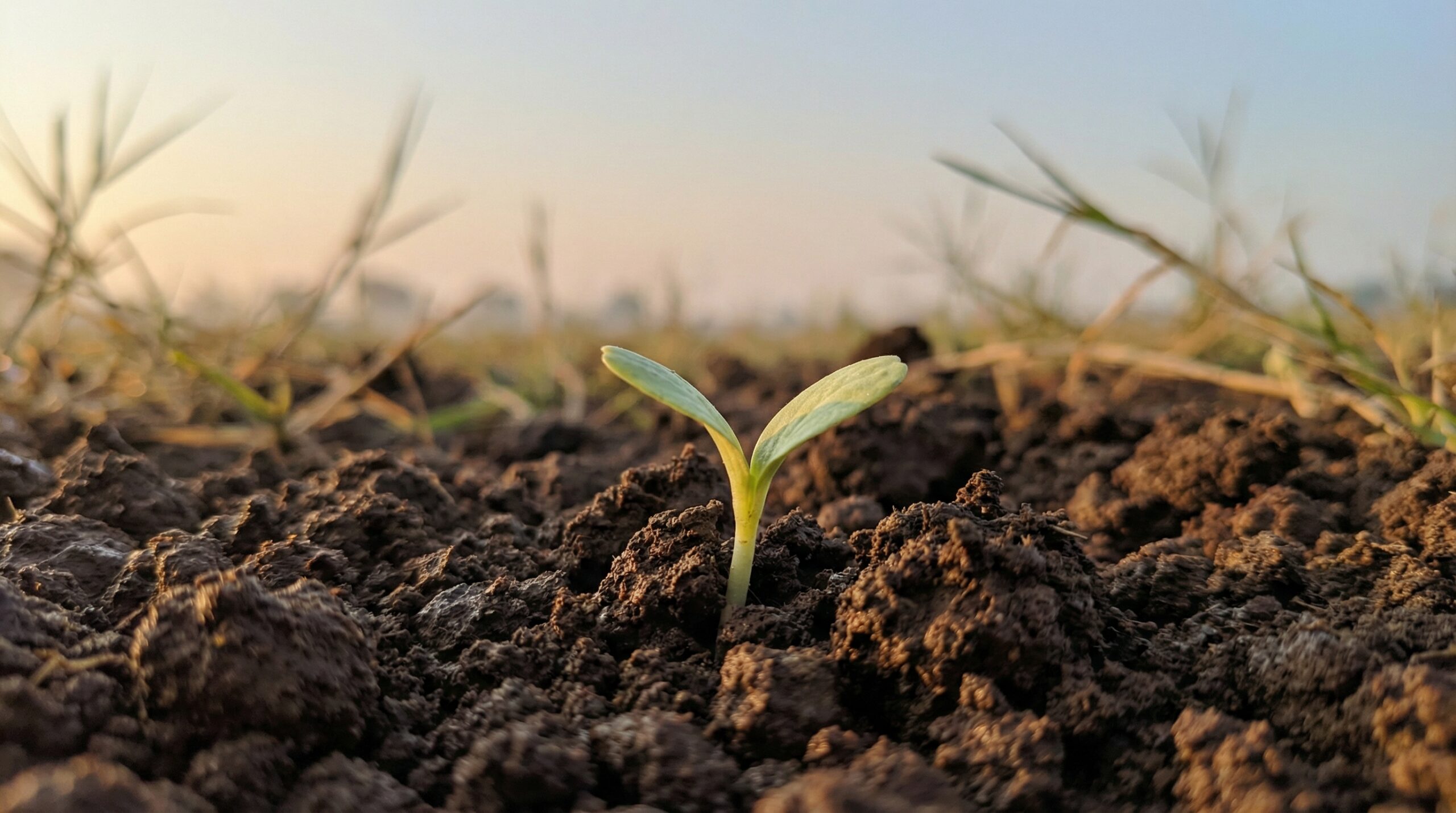
Jesus didn’t explain the Parable of the Sower because His disciples were slow. He explained it because He wanted them to examine themselves — not the crowds, not the hard-hearted Pharisees, not the people who had walked away. Themselves. Matthew 13:18–23 is a mirror, not a map of other people’s failures.
I remember being in a Bible study years ago when someone read this passage and immediately started talking about their neighbor — the one who’d heard the gospel a dozen times and still wasn’t interested. The conversation drifted toward frustration, toward analyzing why other people don’t receive the Word the way they should. We never quite got around to asking the more uncomfortable question.
Which soil am I?
It’s a question that doesn’t resolve easily, which is probably why we avoid it. Most of us would like to believe we’re the good soil — that we hear, understand, and bear fruit as a matter of course. But Jesus describes three other conditions with enough specificity that it’s worth sitting with each one honestly. Not to produce anxiety, but to understand what genuine receptivity actually requires.
The Word That Never Has a Chance
Jesus begins with the hardest case.
“When anyone hears the word of the kingdom and does not understand it, the evil one comes and snatches away what has been sown in his heart. This is what was sown along the path.” (Matthew 13:19, ESV)
The path in a Palestinian field was the hard-packed dirt between rows — ground that had been walked on so many times it could no longer receive seed. It wasn’t rocky. It wasn’t thorny. It was simply impenetrable. The seed sat on the surface until something came and took it.
Jesus identifies that something plainly: the evil one. But notice what makes the theft possible in the first place. The ground is hard. The seed finds no purchase not because the message was unclear, but because the heart had no softness left to receive it. And hearts don’t harden overnight — they harden through repeated exposure to anything that forms them toward resistance. Toward defensiveness. Toward the assumption that they already know what they need to know.
This is one reason why familiarity with the Bible is no guarantee of openness to it. A person can know the stories, quote the verses, and still hold the Word at arm’s length — never letting it do more than confirm what they already believed. The path is hard precisely because it’s been walked on so much. Sometimes the most dangerous condition is not ignorance but the illusion of understanding.
The Joy That Doesn’t Last
The second condition is more surprising — and, honestly, more convicting.
“As for what was sown on rocky ground, this is the one who hears the word and immediately receives it with joy, yet he has no root in himself, but endures for a while, and when tribulation or persecution arises on account of the word, immediately he falls away.” (Matthew 13:20–21, ESV)
Rocky ground in Galilee wasn’t a field scattered with stones. It was a thin layer of soil over a limestone shelf — fertile enough on the surface to germinate seed quickly, warm from the rock beneath, but shallow. The roots could go down only so far before hitting stone. When the sun came up hard, the plant wilted because the roots hadn’t found the moisture they needed to survive.
Jesus says this person receives the Word with joy. That’s not a small thing to notice. This isn’t a cynical hearer or a distracted one. This is someone genuinely moved by the gospel, genuinely excited, genuinely responsive. And yet — no root.
What produces roots? The honest answer is that roots form in the places we can’t see and wouldn’t choose — under the surface, in darkness, through difficulty. A plant roots deeply when it has to search for water. A faith roots deeply when it is not simply carried along by good feelings, enthusiastic community, or the momentum of a meaningful season. The test of roots is always the same: what happens when tribulation or persecution arrives on account of the Word?
This is why Jesus doesn’t say the rocky-ground person’s faith was false from the start. He says it had no root in itself — no internal depth, no formed stability, nothing that had been driven down by genuine engagement with hard things. The question for all of us isn’t whether we received the Word with joy. It’s whether that joy has been deepened by the kind of formation that only difficulty produces.
The Slow Suffocation
The third condition is perhaps the most common, and the most insidious, because it happens gradually.
“As for what was sown among thorns, this is the one who hears the word, but the cares of the world and the deceitfulness of riches choke the word, and it proves unfruitful.” (Matthew 13:22, ESV)
Thorny ground isn’t ruined ground. The seed grows. The problem is that it doesn’t grow alone. The thorns grow too — faster, stronger, more persistent — and eventually they crowd out the light and air until the good plant simply can’t bear fruit. Not because it was destroyed but because it was slowly suffocated by competition.
Jesus names the thorns: the cares of the world, the deceitfulness of riches. He doesn’t say wealth itself is the problem. He says deceitfulness — the quiet lie that more security, more comfort, more control will eventually produce the peace that only Christ gives. The thorns don’t announce themselves as enemies of the Word. They present themselves as reasonable, even responsible concerns. Provision for the family. Stability for the future. Not falling behind.
And slowly, without any single dramatic moment of rejection, the Word gets crowded out. Prayer becomes occasional. Scripture becomes something you intend to get to. The things of God occupy less and less of the mental and emotional space that is increasingly filled with the management of ordinary life.
This isn’t a condition reserved for the wealthy or the obviously worldly. It’s available to anyone whose hands are just full enough of other things that there’s never quite room for the deep, unhurried, formative engagement with God’s Word that good soil requires.
What Good Soil Actually Is
“As for what was sown on good soil, this is the one who hears the word and understands it. He indeed bears fruit and yields, in one case a hundredfold, in another sixty, and in another thirty.” (Matthew 13:23, ESV)
The description is almost quiet in its simplicity: hears the Word and understands it. That word — understands — is doing significant work. In Matthew’s gospel, understanding isn’t merely intellectual comprehension. It’s the kind of reception that takes root and changes something. It’s the difference between information received and truth that reorganizes you from the inside.
Good soil isn’t a naturally superior person. Good soil is cultivated. In Palestinian farming, good soil was the result of sustained work — clearing stones, breaking up compacted ground, pulling thorns, turning the earth. What appears effortless in the growing season reflects deliberate preparation beforehand.
For believers, this cultivation happens through the ordinary means of grace — prayer, Scripture, community, honest confession, and the willingness to let the Word do its searching work rather than managing its conclusions. Good soil is receptive not because it is naturally soft but because it has been repeatedly broken open and cleared of what would prevent growth.
And notice what Jesus says about the yield: a hundredfold, sixty, thirty. The proportions differ, but all three are genuine fruitfulness. Good soil doesn’t produce the same crop in every life — and the Parable of the Sower doesn’t ask us to compare our yield to anyone else’s. It asks only whether the Word is finding real purchase, real root, and real room to grow in us.
The Heart That God Has Always Been After
There’s a reason Jesus follows this parable with its explanation, and a reason Matthew places it where he does in the gospel. Matthew 13 is the great parable chapter — Jesus teaching in parables, the disciples asking why, Jesus explaining that the same word produces different responses depending on the condition of the heart receiving it.
This is not a new problem in Matthew 13. It stretches all the way back to the beginning, to the moment in the garden when God’s word was heard and set aside — when the serpent suggested that God’s instructions weren’t to be trusted, that there was something better to be grasped. The hard path, the shallow root, the thorny competition — these are all, in different forms, the ancient problem of a heart that holds God’s Word at less than full weight.
What God has always been after is a heart that receives His Word as what it actually is — not a threat to manage, not information to file, not one voice among many competing for attention, but the living address of a reigning King who speaks to form His people into who He created them to be. The good soil in Jesus’ parable isn’t a heart that has achieved a certain spiritual level. It’s a heart that has learned, by grace, to stay open.
That kind of heart is formed over time, through difficulty and return, through honest examination and repeated surrender. The Spirit does this work in us — which means the question is not finally about our capacity for goodness but about our willingness to remain available to His forming.
Key Takeaways
- The Parable of the Sower is a diagnostic, not a verdict. Jesus offers it as a mirror for self-examination, not a judgment on others. The honest question is always: which condition describes my own heart right now?
- Hard hearts form gradually through repeated resistance. Familiarity with Scripture is not the same as openness to it. The path becomes hard through use, not neglect.
- Roots form through difficulty, not enthusiasm. Joy at receiving the Word is real and good — but depth only comes through the kind of formation that requires searching for what it needs.
- The thorns choke slowly. The cares of the world rarely announce themselves as enemies of the Word. They crowd it out through ordinary accumulation, not dramatic rejection.
- Good soil is cultivated, not natural. Genuine receptivity is the result of sustained, grace-empowered preparation — clearing what would prevent growth and remaining open to the Word’s forming work.
Questions Worth Sitting With
Jesus is describing conditions of the heart, not fixed categories of people. The same person can move through different conditions in different seasons. The point of the parable isn’t to locate yourself permanently in one type but to examine honestly what is true of your heart right now — and to seek, by grace, the conditions that allow the Word to take real root.
In Matthew’s use, understanding is more than intellectual comprehension. It’s the kind of reception that results in genuine transformation — where truth doesn’t just inform but reorganizes. It’s the difference between knowing what Jesus said and being formed by it. That kind of understanding is less about study technique and more about the posture of the heart doing the receiving.
The test Jesus gives is plain: what happens when tribulation or persecution arises on account of the Word? That doesn’t mean a person with shallow roots has no real faith — it means their faith hasn’t yet been deepened by the kind of difficulty that drives roots down. The question isn’t whether you’ve suffered, but whether your engagement with the Word deepens when things are hard or whether it fades.
Yes — but it requires the same deliberate work that cultivating good soil always has. Naming specifically what has been crowding out the Word, confessing it honestly, and making the practical changes that create space for unhurried engagement with Scripture. This isn’t a one-time clearing but an ongoing discipline of guarding the ground where the Word is meant to grow.
The good news underneath this parable is simple but steady: the Sower keeps sowing. He doesn’t withhold the seed from ground that has been hard or shallow or crowded. He sows it anyway — generously, repeatedly, without calculation about the odds. The question He leaves with us is not whether the seed is good. It always is. The question is what we are doing, by grace and by choice, with the ground we’ve been given.
Christ reigns. Christ restores. Christ will return.
Longing for Christ, learning to wait faithfully.
Your brother in Christ,
Duane
The overall structure and pacing of this post make it very enjoyable to read, because the discussion stays well structured, well-rounded, and engaging while still feeling accessible for different readers online.
This is actually a very interesting perspective to read, especially because the way everything is explained here feels smooth, clearly structured, and open for discussion, which makes the whole post much more enjoyable and comfortable to read compared to many other posts online lately.
This post creates a really comfortable atmosphere for discussion because the tone remains positive and friendly while the ideas themselves are presented clearly and in a way that feels relatable.
I think this post works very well because it explains the topic in a clear way without overcomplicating anything, while also maintaining a calm and interesting tone that makes the discussion more enjoyable overall.