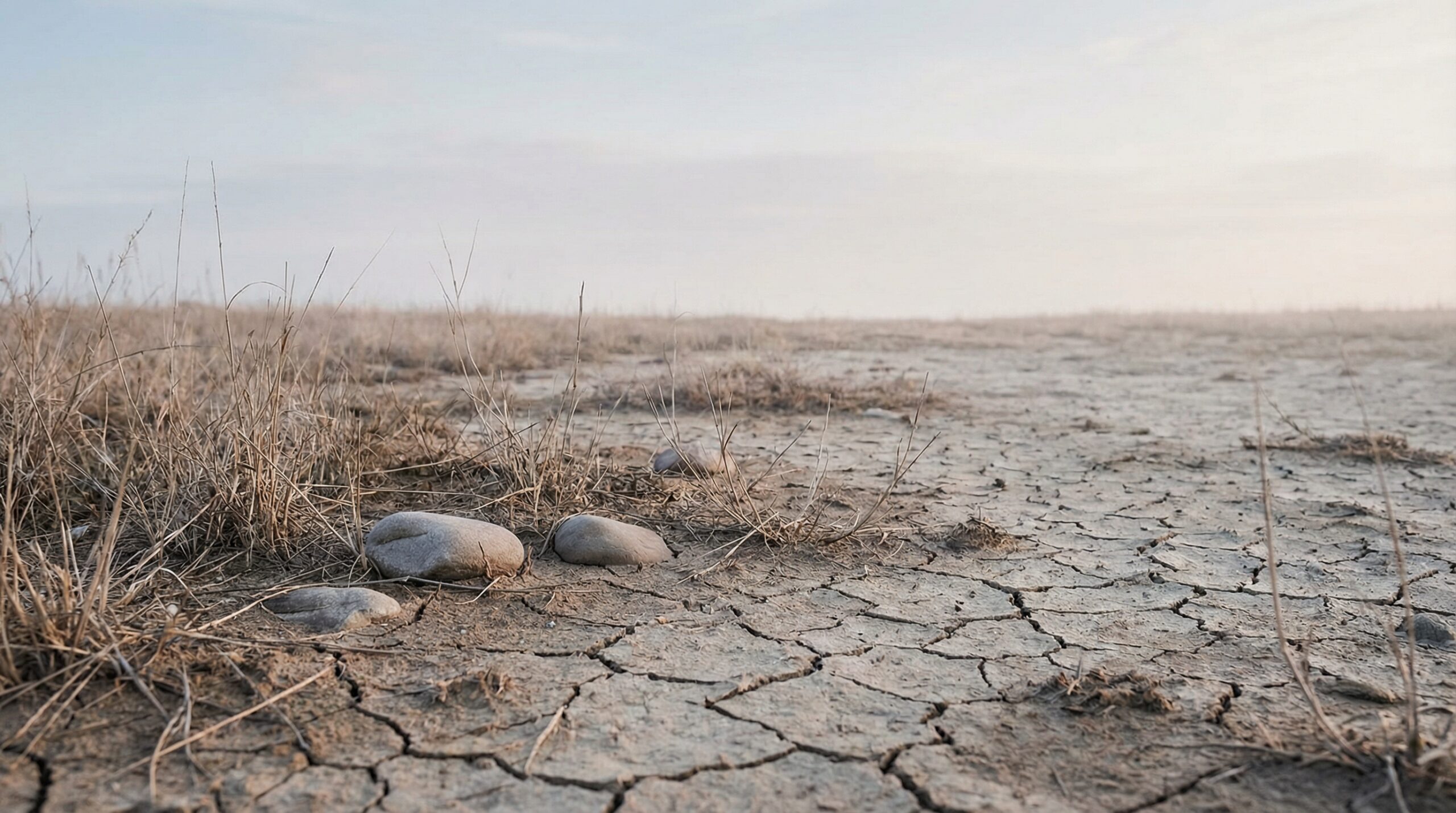
When a hoped-for outcome fails publicly and visibly, the grief is real — but so is the diagnostic. Every collapsed hope reveals something true about what was actually holding the weight. This article examines what those moments expose, why they happen in a world still marked by the Fall, and how God’s demonstrated faithfulness across centuries points toward a different kind of anchor.
I remember the feeling in the room when something a lot of people had been counting on didn’t happen. It wasn’t just disappointment — it was something closer to disorientation. Like the floor had shifted. And in the days that followed, I noticed something in a lot of the conversations I was having: people weren’t just grieving an outcome. They were grieving an identity. Somewhere along the way, without fully meaning to, they had tied who they were and what they believed about the future to whether this particular thing resolved a particular way.
I don’t say that critically. It’s a deeply human tendency. And it cuts across every political position, every generation, every kind of community. The pattern is older than any of us.
But those moments — when something publicly hoped-for collapses — have a way of surfacing a question worth sitting with honestly: what was I actually trusting? And is that a foundation that can bear the weight I placed on it? That’s the question a collapsed hope is uniquely positioned to surface — and it’s one worth sitting with honestly rather than moving past quickly.
Why Political and Cultural Hope Always Has a Ceiling
There’s nothing wrong with caring about the world — about elections, institutions, justice, or the direction of a culture. Scripture calls believers to love their neighbors, to seek the welfare of the city, and to live as people whose character reflects their King. Those concerns are real and right.
But there is a structural difference between caring about those things and anchoring hope in them. And that difference becomes visible the moment they fail.
Every political hope — every institutional hope, every cultural movement, every leader — shares the same ceiling: it is finite, human, and operating within a world that is still bearing the weight of the Fall. That’s not cynicism. It’s the biblical account of why even good things break down. Humanity was created for fellowship with God, and when that fellowship was fractured, the disorder ran deep. Work became strained. Relationships bent under pressures they weren’t built to bear alone. Systems built by human hands carried within them the same fracture that runs through everything east of Eden.
This means that when political hope collapses, it isn’t a malfunction. It’s the created order performing exactly as Scripture says it will — unable to sustain what only God can sustain.
The grief is real. But the collapse is also an invitation to notice what was actually holding the weight of your hope, and whether that foundation can bear it.
What the Grief Is Actually Telling You
There’s a moment in the Psalms where the writer is completely undone — not by private suffering, but by the visible failure of something they had trusted publicly. Psalm 46 opens into that kind of moment:
“God is our refuge and strength, a very present help in trouble. Therefore we will not fear though the earth gives way, though the mountains be moved into the heart of the sea.”
(Psalm 46:1–2, ESV)
The language is not metaphorical tidiness. It’s describing the kind of moment where the reliable things — mountains, solid ground — give way. And the Psalmist’s response isn’t to pretend it didn’t happen or to redirect quickly toward optimism. It’s to name the reality and then name the anchor that the reality cannot dislodge.
God is our refuge. Not a political outcome. Not a leader. Not a restored normalcy. The refuge is a person, and that person is not subject to election cycles, institutional collapse, or the shifting of cultural momentum.
That reorientation isn’t easy, and it doesn’t happen instantly. But it begins with honesty — with letting the grief of a collapsed hope reveal what was actually holding the weight, and then asking whether there’s a foundation that operates differently.
God’s Faithfulness Operates on a Longer Arc Than Any Political Moment
God’s covenant with Israel wasn’t fulfilled quickly. It stretched across centuries of waiting, wilderness, exile, and apparent abandonment. Generation after generation lived and died without seeing the resolution they’d been promised. And yet the promises held — not because conditions were favorable, but because the One who made them was faithful regardless of conditions.
Ezekiel wrote to a people in exile — people who had watched everything they’d built collapse publicly and completely — and spoke of restoration:
“And the land that was desolate shall be tilled, instead of being the desolation that it was in the sight of all who passed by. And they will say, ‘This land that was desolate has become like the garden of Eden.'”
(Ezekiel 36:34–35, ESV)
That’s not a promise fulfilled in the next political cycle. It’s a promise that operated across generations, through collapse and exile, toward a restoration that arrived on God’s timeline rather than Israel’s. The point isn’t the specific fulfillment — it’s what the fulfillment reveals about the character of the One who promised it.
God’s faithfulness doesn’t run on the same clock as political events. It moves across a longer arc, toward a deeper restoration, than any human system can either accelerate or prevent.
The Anchor That Doesn’t Move With the News
Peter writes to communities scattered and pressured — people for whom the immediate situation was genuinely hard — and he anchors them not in better circumstances coming soon, but in something that operates independently of circumstances entirely:
“Blessed be the God and Father of our Lord Jesus Christ! According to his great mercy, he has caused us to be born again to a living hope through the resurrection of Jesus Christ from the dead, to an inheritance that is imperishable, undefiled, and unfading, kept in heaven for you.”
(1 Peter 1:3–4, ESV)
Three words describe this inheritance: imperishable, undefiled, unfading. Each one is specifically calibrated against the ways human hopes fail. Political outcomes perish. Institutions become defiled. Cultural momentum fades. The inheritance Peter describes does none of those things — not because conditions are good, but because it is kept by someone whose faithfulness doesn’t depend on conditions.
This is the anchor that doesn’t move with the news. Not because it requires you to stop caring about the news, but because it gives you somewhere to stand that isn’t determined by it. That somewhere is a Kingdom that cannot be shaken, regardless of what is.
A collapsed hope is painful. But it is also one of the clearest diagnostics God ever gives us — a moment where what we were actually trusting becomes visible, and where a different kind of trust becomes possible.
Living Between the Collapse and the Completion
The honest reality for Kingdom citizens is that we live in the middle of a story that hasn’t finished yet. Christ reigns now — that’s not future tense, it’s present. But the full completion of what He has begun is still coming. We live in that in-between space, which means we will regularly encounter moments where things we hoped for don’t resolve the way we wanted, and where the temptation is to either despair or to find a new human system to anchor to.
Scripture’s answer to that temptation is neither despair nor redirection. It’s reorientation — back to the God whose purposes aren’t derailed by the things that derail ours, whose faithfulness operates across a longer arc than any single moment, and whose return will complete what no political cycle ever could.
You can grieve a collapsed hope. That grief is appropriate and human. But you don’t have to let it become the final word about where your trust belongs.
The same God who sustained Israel through exile — who kept promises across centuries of apparent silence — is the same God whose purposes for you have not been derailed by anything that has failed you. His faithfulness is not contingent on the outcomes that disappointed you. It was never contingent on those outcomes to begin with.
Key Takeaways
- A publicly collapsed hope is painful, but it is also a diagnostic — it reveals what was actually holding the weight of trust, and whether that foundation can sustain it.
- Political and cultural hopes all share the same ceiling: they operate within a fractured created order and cannot sustain what only God can sustain. That’s not cynicism — it’s the biblical account of how the world works.
- The story of Israel demonstrates that God’s faithfulness operates across a longer arc than any political moment, through collapse and exile, toward a restoration that arrives on His timeline.
- Peter’s description of the inheritance as imperishable, undefiled, and unfading is specifically calibrated against the ways every human hope eventually fails.
- Kingdom citizens live in the middle of a story still unfolding — which means collapsed hopes are expected, not signs of abandonment. Reorientation, not despair, is the faithful response.
Questions Worth Sitting With
Because every political hope — every institutional hope, every cultural movement — operates within a created order that Scripture honestly describes as fractured. Systems built by human hands carry within them the same limitations that run through everything east of Eden. That’s not cynicism; it’s the biblical account of why even good things have ceilings. The disappointment isn’t a malfunction. It’s the created order performing exactly as Scripture says it will — unable to sustain what only God can sustain.
No. Scripture calls believers to love their neighbors, seek the welfare of the city, and live as people whose character reflects their King. Those concerns are real and right. The distinction the article draws isn’t between caring and not caring — it’s between caring about something and anchoring hope in it. You can care deeply about an outcome without placing the weight of your trust in it. That distinction becomes visible the moment it fails.
The language isn’t metaphorical tidiness — it’s describing the kind of moment where reliable things shift. Mountains and solid ground were the ancient world’s picture of stability. The Psalmist is naming the experience of watching dependable things give way, and then naming the anchor that those things cannot dislodge. God is our refuge not because circumstances are stable, but because He is present precisely when they aren’t. The Psalm doesn’t skip past the collapse — it names it and then reorients.
Israel’s story is one of the clearest pictures Scripture gives us of what faithfulness across a long arc actually looks like. Generation after generation lived and died without seeing the resolution they’d been promised — through wilderness, exile, and apparent silence. And yet the promises held, not because conditions were favorable but because the One who made them was faithful regardless of conditions. That pattern isn’t just historical. It’s a demonstration of character. The same God whose faithfulness ran through Israel’s long wait is the same God whose purposes for you haven’t been derailed by what has failed you.
Peter chose those three words specifically. Each one is calibrated against the ways human hopes fail. Political outcomes perish — they end, are overturned, or simply run out. Institutions become defiled — they drift, corrupt, or disappoint. Cultural momentum fades — what seemed permanent becomes dated. The inheritance Peter describes does none of those things, not because conditions are good but because it is kept by someone whose faithfulness doesn’t depend on conditions. It’s a description of a foundation that operates differently than everything else you’ve trusted.
The world will keep cycling through moments where hoped-for outcomes collapse publicly. That has always been true and will remain true until Christ returns to complete the restoration He has begun. When those moments come — and they will — let them do their diagnostic work. Let them surface the question of what was actually holding the weight. And then let that question lead you back to the One whose faithfulness was never contingent on the outcome that just failed.
He is not finished. He is not surprised. And He is not running on the same clock as the news cycle.
Christ reigns. Christ restores. Christ will return.
Longing for Christ, learning to wait faithfully.
Your brother in Christ, Duane