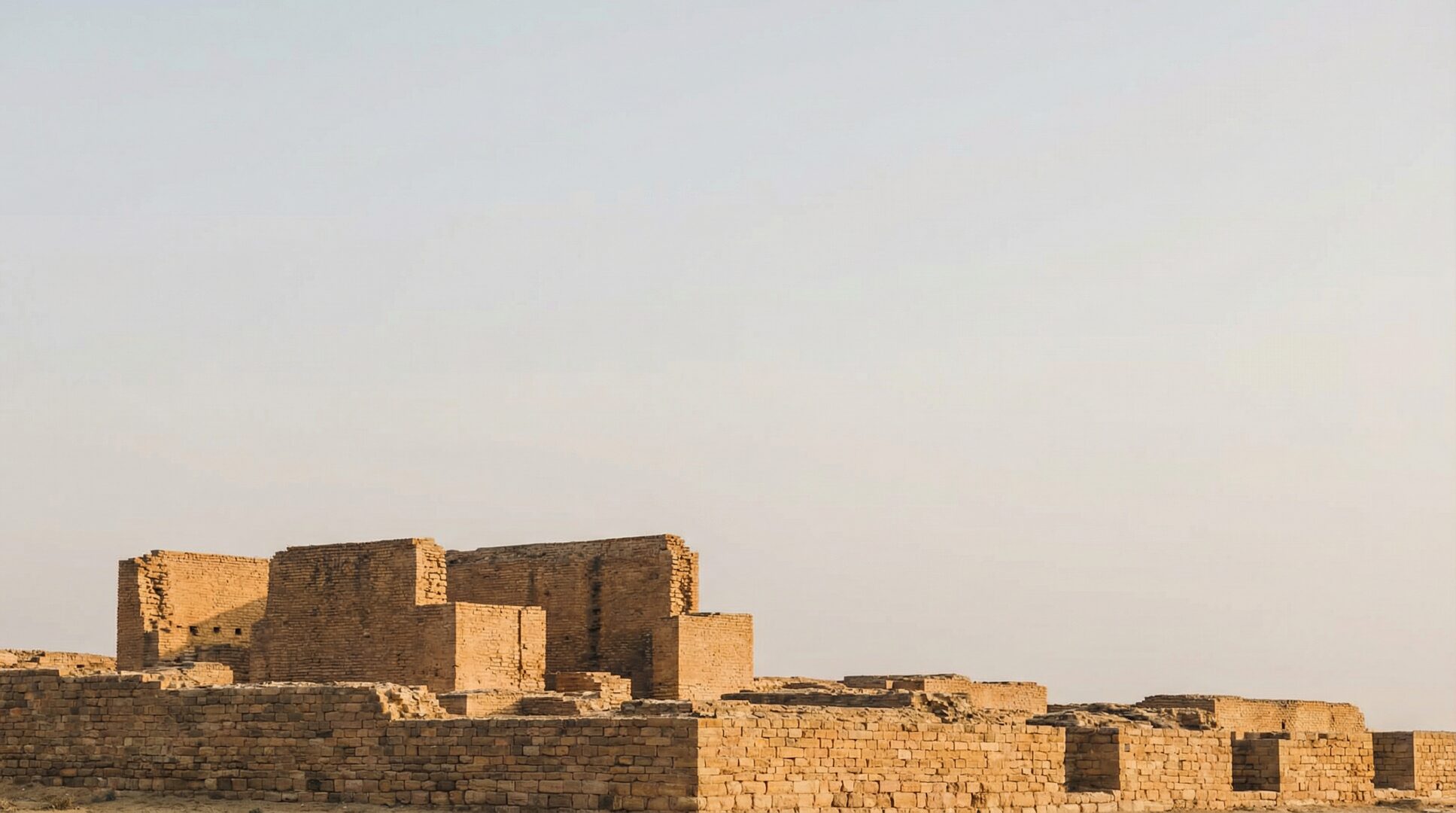
The Tower of Babel isn’t primarily a story about ancient architecture or divine punishment. It’s a portrait of a recurring human impulse — the drive to build security, significance, and unity apart from God — and it diagnoses something in the human heart that shows up in every generation. Pentecost answers that impulse directly, not by condemning it but by offering what Babel was actually reaching for.
There’s a phrase in the Babel account that I keep coming back to. Not the tower. Not the language confusion. It’s this: “let us make a name for ourselves.”
That sentence is doing a lot of work. It’s not describing malice or overt rebellion. It’s describing something more recognizable than that — the very human desire to matter, to build something lasting, to secure the future through collective achievement. The people at Babel weren’t scheming against God in any obvious sense. They were doing what people do when they forget that what they’re reaching for already has a source.
That’s what makes this story so persistent. It’s not a once-in-history episode. It’s a diagnosis. And like every good diagnosis, it points toward the remedy.
What Babel Was Actually About
The narrative in Genesis 11 is brief but precise:
“Come, let us build ourselves a city and a tower with its top in the heavens, and let us make a name for ourselves, lest we be dispersed over the face of the whole earth.”
(Genesis 11:4, ESV)
There’s a detail in this text that a Jewish rabbinic tradition draws attention to — one that changes the emotional weight of the entire scene considerably. The builders coated the tower in bitumen, a waterproofing material used as mortar between the bricks. The flood was recent memory. The people at Babel had inherited the story of what God had done — an entire civilization swept away, only eight people surviving in a vessel sealed against the rising waters. And now, on the plain of Shinar, they were building something waterproofed and reaching toward the very heavens from which the rain had come.
The tower wasn’t merely a monument to human greatness. It was insurance against God. A structure high enough and sealed well enough to survive another judgment.
That reframes “let us make a name for ourselves” in a darker and more honest light. This isn’t arrogance in a vacuum — it’s the response of people who know God is real, have seen what He can do, and have decided to secure their own future rather than trust Him with it. Not defiance for its own sake, but self-preservation against the God they had every reason to fear.
When you understand it that way, three things in the passage become clearer.
First, they’re seeking permanence through human achievement. “Lest we be dispersed” — the motivation underneath the building project is fear. Fear of scattering, of losing cohesion, of being at the mercy of forces beyond their control. They want to build something that will hold them together and give them standing regardless of what God might do next.
Second, the unity is organized around themselves rather than around God. There’s nothing inherently wrong with cities or collective effort. What Scripture identifies as the problem is the organizing center: “let us make a name for ourselves.” God is absent from the ambition. The project is entirely self-referential — human beings securing their own future by their own means, with no reference to the God who might have something to say about it.
Third, God’s response is surgical rather than punitive. He doesn’t destroy the tower or the city. He scatters the people and confuses the language. The judgment is proportional to the problem: a unity organized around human self-preservation, away from God, is broken up — not because God is threatened by it, but because a unity that excludes God and fears Him simultaneously is not the unity He designed humanity for. He interrupts the project rather than destroying it, making space for something better.
What God’s Instructions to Noah Actually Reveal
Here’s where the Babel story becomes even more striking — because it stands in deliberate contrast to what God had already provided for Noah. The word God used when He told Noah to waterproof the ark was kopher. That same word appears in 73 other places in the Old Testament, where it is translated not as pitch but as atonement. It’s the same root word as Kippur — as in Yom Kippur, the Day of Atonement.
The pitch God told Noah to use to seal the ark against the judgment waters was, in the Hebrew, a covering — the same kind of covering that Scripture uses to describe what atones for sin. What sealed Noah’s family inside the ark while judgment fell outside was, in the language of the text, atonement.
The Babel builders were reaching for the same kind of protection — building something waterproofed against the God they feared — but they were doing it with their own materials, on their own initiative, through their own effort. The contrast isn’t primarily about the substance. It’s about the source. Noah had a covering provided by God. The Babel builders were trying to manufacture their own.
That distinction cuts to the heart of what the entire narrative is diagnosing. The human impulse after the flood wasn’t to trust the God who had just demonstrated both His power to judge and His willingness to save. It was to build independence from Him — to construct a future that wouldn’t require dependence on His mercy. And that impulse, however understandable, is precisely what Scripture consistently names as the fundamental problem with fallen humanity.
The Impulse Babel Names Is Perennial
What makes the Babel narrative formative rather than merely historical is that it identifies something the human heart returns to in every era. The impulse to build significance apart from God, to organize unity around human achievement, to secure the future through collective control against forces that feel threatening — these aren’t ancient tendencies that modernity has outgrown. They’re as present now as they were on the plain of Shinar.
The Babel builders weren’t naive about God. They weren’t people who had simply forgotten He existed. They had witnessed His power and they were afraid of it — and their response to that fear was to build their way out of dependence on Him. That is not a primitive impulse. It’s a very sophisticated one. And it’s one that every generation finds new materials and new methods to express.
This isn’t a political observation — it’s a theological one. Every era produces its own version of “let us make a name for ourselves” — its own attempt to secure human flourishing through systems, institutions, and collective achievement that doesn’t require dependence on God. Sometimes those attempts produce genuine goods. God is not indifferent to human flourishing and He uses human effort within His purposes.
The discernment question isn’t whether something was built by human hands. It’s whether the organizing center has shifted from God’s purposes to human self-sufficiency — whether the ambition, however impressive, is functionally asking “how do we secure our own future against what we fear” rather than “how do we live within what God has made and provided.” That question produces wisdom rather than paranoia. It’s worth asking honestly.
What Pentecost Says in Response
The Babel story doesn’t have a resolution within Genesis 11 itself. The people are scattered, the languages divided, the project abandoned, and the fear that drove them to build in the first place is presumably still unresolved. But Scripture returns to that unfinished story at Pentecost — and the connection is deliberate.
In Acts 2, the Spirit falls on believers gathered in Jerusalem. The immediate sign is that they speak in other languages, and the crowd that gathers hears them in their own tongues — Parthians, Medes, Elamites, people from every region represented:
“And at this sound the multitude came together, and they were bewildered, because each one was hearing them speak in his own language.”
(Acts 2:6, ESV)
This is Babel reversed. Not by human achievement — not by building something impressive enough or sealed well enough to reunite divided humanity — but by the Spirit of God moving through the gathered people of Christ. The division that judgment introduced is being undone. The fear that drove the building project — the desperate need for a security that wouldn’t depend on God’s mercy — is being answered not by a better tower but by the very presence of God among His people.
And the true answer to what Babel was actually reaching for turns out to be not a waterproofed structure but a crucified and risen King. The kopher — the covering, the atonement — that Noah’s ark pointed toward has arrived. The judgment Babel was so afraid of was absorbed by Christ. The covering the Babel builders were trying to build for themselves has been provided, once and finally, by the One they were building against.
That reversal matters enormously. The unity God is restoring isn’t organized around nationality, political alignment, economic system, or any form of human self-preservation. It’s organized around the person of Jesus Christ and the Spirit He sends. And it comes not through building upward toward heaven but through God coming down to dwell among His people — which is the direction the story has been moving since Eden.
Living Between Babel and the New Jerusalem
Believers live in the space between Babel’s diagnosis and Pentecost’s promise — in a world that still organizes significant amounts of its energy around self-sufficiency and collective self-preservation, while belonging to a Kingdom whose unity is already being built by different means.
That position doesn’t require suspicion of every institution or withdrawal from ordinary participation in the world. What it requires is a clear-eyed understanding of where ultimate trust belongs and what kind of covering actually lasts. The Babel question — are we building our own security against what we fear, or trusting the God who has already provided the covering we actually need? — is one worth asking honestly about where our own hearts are anchored.
The city God is building doesn’t appear in Genesis 11. It appears at the end of Revelation — a city that comes down from heaven rather than being built up toward it, where God dwells fully with His people, where every nation and language is represented not through forced uniformity but through genuine restoration. The New Jerusalem is the answer to both Babel’s ambition and Babel’s fear — not the city humanity was trying to build, but the city God has been building all along. That city is already our citizenship — not a future aspiration but a present belonging.
That’s the direction the story is moving. And believers who understand that don’t need to be threatened by the world’s attempts to build its own version of permanence and security. Those attempts will always fall short of what they’re actually reaching for — because what they’re reaching for, genuine community, lasting significance, a future safe from judgment, is only available from the One who has already provided the covering Babel was trying to construct.
Key Takeaways
- Babel is a portrait of a perennial human impulse — building security, significance, and unity organized around human self-preservation rather than dependence on God — not a one-time historical curiosity.
- A Jewish rabbinic tradition notes that the builders coated the tower in bitumen, waterproofing it against another flood. This suggests the project was partly driven by fear of God’s judgment — self-preservation against the God they had witnessed in the flood.
- God told Noah to waterproof the ark with kopher — a Hebrew word used 73 other times in the Old Testament as “atonement,” related to kippur. The covering that sealed Noah’s family from judgment waters was, in the language of Scripture, an atonement. The Babel builders were reaching for the same kind of protection through their own materials and their own effort, rather than receiving it from God.
- Pentecost reverses Babel directly — the division that judgment introduced is undone not through human achievement but through God’s Spirit moving among His gathered people in Christ. The true kopher, the covering that absorbs judgment, is Christ Himself.
- The unity God is building is organized around Jesus Christ and moves toward the New Jerusalem — a city that comes down from heaven rather than being built up toward it. Believers belong to that story already.
Questions Worth Sitting With:
The Babel narrative is primarily a diagnosis of a recurring human impulse — the drive to build security, significance, and unity through human achievement rather than dependence on God. The builders weren’t simply proud. They were afraid. The flood was recent memory, and they were building something waterproofed and reaching toward the heavens — insurance against the God they had witnessed in judgment. The main lesson isn’t that ambition is wrong. It’s that ambition organized around self-preservation rather than trust in God will always come up short of what it’s actually reaching for.
God’s response to Babel is surgical rather than punitive — He doesn’t destroy the tower or the city, He scatters the builders and confuses their language. The judgment is proportional to the problem: a unity organized around human self-preservation, excluding God and fearing Him simultaneously, is interrupted rather than simply destroyed. Scripture consistently shows God acting this way — not crushing human effort but redirecting it, making space for something better. The scattering isn’t the end of the story. Pentecost is.
Pentecost is the direct reversal of Babel. At Babel, God confused the languages and scattered the people — a unity built around human pride was broken apart. At Pentecost, the Spirit falls on gathered believers and they speak in languages people from every region can understand. The division judgment introduced is being undone — not through a better tower but through the presence of God among His people. The unity Babel was reaching for is restored, but through an entirely different organizing center: not human achievement but Jesus Christ and the Spirit He sends.
Kopher is the Hebrew word God used when He told Noah to waterproof the ark in Genesis 6:14. It means “covering” and is related to the root word kaphar — to cover or atone. Remarkably, the same word appears 73 other times in the Old Testament translated as “atonement,” and shares its root with Kippur as in Yom Kippur, the Day of Atonement. The pitch that sealed Noah’s family inside the ark while judgment fell outside was, in the language of Scripture, a covering — the same word Scripture uses to describe what atones for sin. The covering God provided for Noah pointed forward to the covering Christ would provide for all who belong to Him.
Completely — because the impulse it names is perennial. Every generation produces its own version of “let us make a name for ourselves” — its own attempt to secure human flourishing through systems, institutions, and collective achievement that doesn’t require dependence on God. The Babel builders weren’t naive about God; they had witnessed His power and were building their way out of dependence on Him. That response is as recognizable today as it was on the plain of Shinar. The formative question Babel poses isn’t about ancient history — it’s whether the organizing center of our trust has shifted from God’s purposes to human self-sufficiency. That question is worth asking honestly in every era.
The Babel impulse is ancient and the diagnosis is honest — the human heart reaches for permanence, security, and community through its own means when it fears what God might do, and it always comes up short. But the response to Babel isn’t despair and it isn’t alarm. It’s the recognition that what humanity was reaching for at Shinar is genuinely available — just not through human construction. Through the One who provided the covering Noah’s ark pointed toward, who bore the judgment Babel was building against, and whose Spirit is already gathering what Babel scattered.
That’s a better security than anything we could build for ourselves.
Christ reigns. Christ restores. Christ will return.
Longing for Christ, learning to wait faithfully.
Your brother in Christ,
Duane