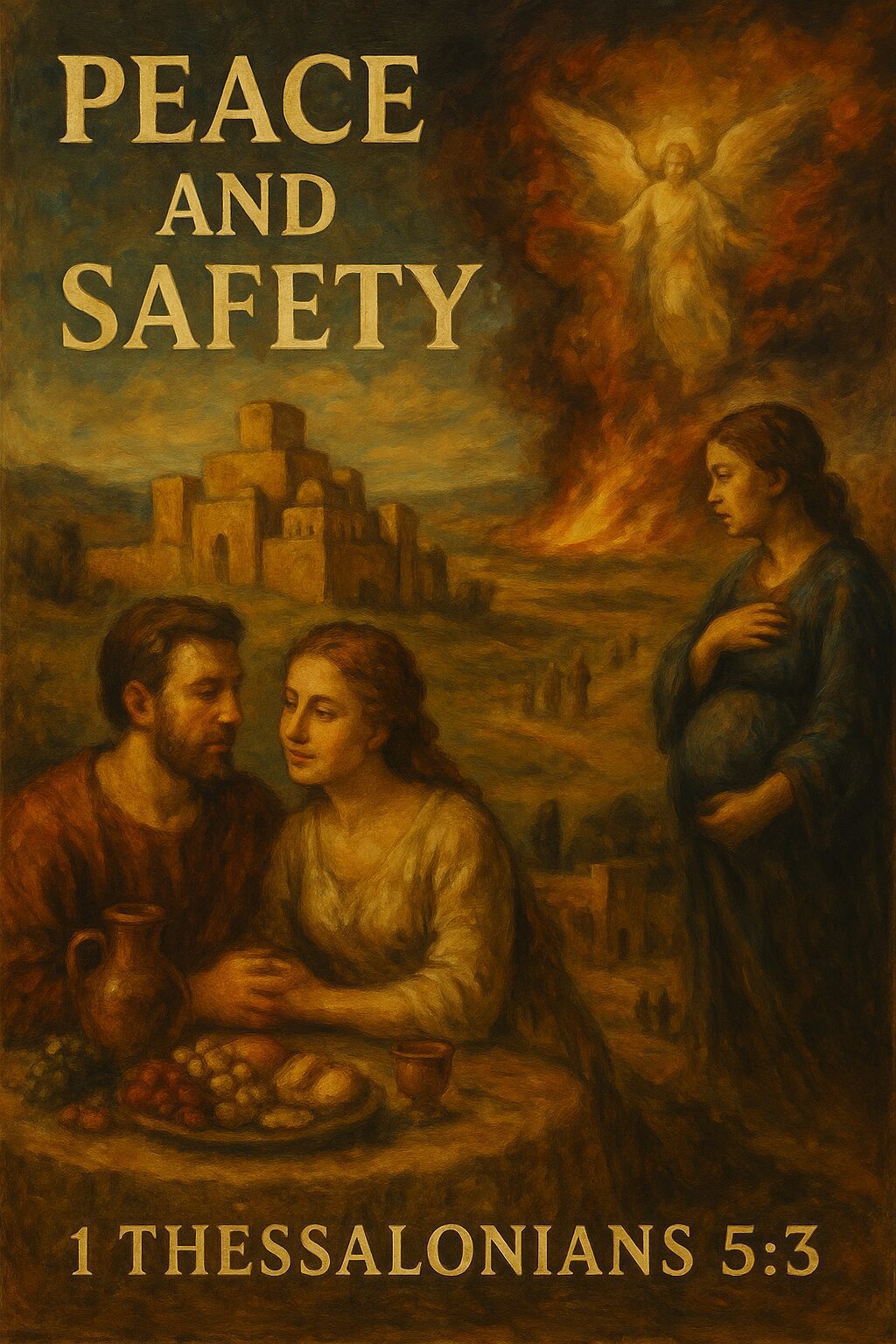
“While people are saying, ‘There is peace and security,’ then sudden destruction will come upon them as labor pains come upon a pregnant woman, and they will not escape.” — 1 Thessalonians 5:3, ESV
Scripture reminds us that there will be seasons when the world speaks confidently of “peace and security.” These words are not merely political language. They describe a posture of human confidence — a belief that stability has been achieved apart from God.
Rather than inviting speculation, Paul’s words invite discernment. He is not offering believers a timeline to decode, but a contrast to recognize: the difference between false security rooted in human systems and true peace grounded in Christ our King.
The issue is not whether peace agreements exist or alliances are formed. The deeper concern is where people place their trust.
The Illusion of Peace
Jesus once described a season of history when daily life appeared normal and uninterrupted, even as judgment approached (Matthew 24:38–39). People were not openly hostile to God; they were simply living as though God were irrelevant.
Paul echoes that same spiritual condition (1 Thessalonians 5:3). “Peace and security” describes a mindset of self-assurance — a world convinced it can manage life, risk, and the future on its own terms.
This kind of peace is not the peace Scripture celebrates. It is calm without repentance, stability without surrender, confidence without dependence on God. True peace does not come from treaties, systems, or progress. It flows from reconciliation with God through Jesus Christ, who reigns even now.
A Word to the Church, Not a Warning to Decode
Paul’s teaching in 1 Thessalonians 5 is not primarily aimed at predicting events, but at forming faithful people. His concern is not that believers would calculate when the Day of the Lord arrives, but that they would live as those who already belong to another Kingdom.
The world may experience moments of optimism and confidence, but God’s people are called to a different posture — not fear, and not fascination, but steady readiness rooted in identity.
Paul reminds believers that they are not meant to live in spiritual darkness (1 Thessalonians 5:4). That does not mean we know future details. It means we know who we belong to, and therefore how we live.
Peace That Cannot Be Shaken
For citizens of God’s Kingdom, security does not rise and fall with world conditions. Our peace is not threatened when the world feels stable, nor does it collapse when the world is shaken.
Jesus reigns now. His authority is not delayed, and His purposes are not fragile. The future is secure not because we understand events, but because we trust the King who holds them.
This is why Scripture consistently redirects believers away from speculation and toward faithfulness. The call is not to identify the moment when false peace fails, but to remain anchored in true peace regardless of circumstances.
Living as Faithful Kingdom Citizens
So how should citizens of God’s Kingdom live when the world speaks confidently of peace and security?
- Live awake, not anxious. Spiritual alertness is not fear-driven vigilance but steady obedience shaped by hope (1 Thessalonians 5:6 ).
- Practice quiet faithfulness. Ordinary obedience — prayer, love, integrity, generosity — is how Kingdom citizens bear witness.
- Encourage one another. Paul repeatedly emphasizes mutual strengthening, not alarm (1 Thessalonians 5:11).
- Rest in Christ’s reign. Our confidence is not in knowing what comes next, but in knowing who reigns now.
The language of “peace and security” is not given to frighten believers. It is given to remind us that false peace is temporary, but Christ’s Kingdom is unshakable.
We do not watch the world to guess the future.
We watch our King and live faithfully in the present.
“So then let us not sleep, as others do, but let us keep awake and be sober.” — 1 Thessalonians 5:6
F.A.Q.
No. In Scripture, the phrase describes a mindset of human confidence apart from God, not a timeline or event to decode.
No. Paul’s aim is to form steady, faithful believers who live in the light of Christ’s reign, not in anxiety.
False peace rests on human systems and self-assurance. True peace flows from reconciliation with God through Christ.
With quiet faithfulness—awake, hopeful, and anchored in Christ rather than distracted by speculation.
Spread the Gospel; lives depend on it!
I pray, MARANATHA! (Come Quickly, Lord Jesus!)
Your brother in Christ,
Duane
Read all of our Principles for Christian Living in the Last Days
Read the Bible Online – We recommend:
The ESV (English Standard Version) for reading
The NASB (New American Standard Bible) for in-depth study